

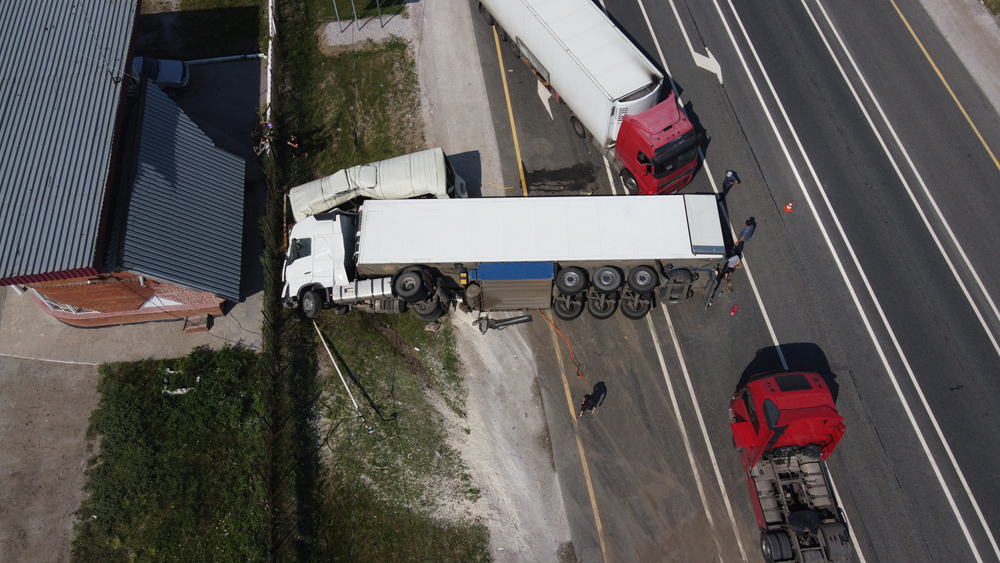
Truck accident liability in Texas extends well beyond the driver behind the wheel. The trucking company, the cargo loader, the shipper, the maintenance contractor, and the vehicle manufacturer may all share legal responsibility for a single crash depending on what caused it and who made the decisions that led to it.
A truck accident lawyer maps that full picture from the start, because pursuing only the driver often means recovering a fraction of what the claim is actually worth.
That framing surprises most people who’ve been in a serious commercial truck crash. The driver caused the accident, so the driver is the target. That logic is understandable, but it misses how liability actually works in commercial trucking cases.
The driver operates within a system, and every part of that system, the company that hired them, the crew that loaded the trailer, the shop that last serviced the brakes, made decisions that either contributed to or could have prevented the crash.
Understanding who bears truck accident liability in Texas, what legal theories apply to each party, and why a wider liability net often changes the value of a claim gives injured victims a more complete picture of what accountability looks like after a serious collision.
What the Law Says
- Truck accident liability in Texas frequently involves multiple defendants beyond the driver, including the trucking company, cargo loaders, maintenance contractors, and equipment manufacturers
- Respondeat superior holds trucking companies liable for a driver’s negligent acts committed within the scope of employment, making suing the trucking company in Austin a viable and often essential step
- Negligent hiring and negligent retention claims against a Texas trucking company arise when a carrier knew or should have known a driver was unqualified, impaired, or had a disqualifying safety record
- Cargo loader liability in truck accidents applies when improper loading or unsecured freight caused a shift or spill that contributed to the crash
- Federal Motor Carrier Safety Administration regulations create a paper trail of compliance failures that often drives the liability analysis in Texas truck accident cases
Suing the Trucking Company in Austin: Two Legal Paths
Suing the trucking company in Austin for a truck accident typically follows one of two legal theories, and in many cases both apply simultaneously.
Respondeat Superior and Vicarious Liability
Respondeat superior is a Latin phrase that translates roughly to “let the master answer.” Under this doctrine, an employer is held liable for the negligent acts of an employee committed within the scope of their employment. When a truck driver causes a crash while hauling freight on a carrier’s behalf, respondeat superior makes the trucking company directly liable for the driver’s conduct.
Texas courts apply respondeat superior to trucking cases when the driver was an employee, on duty, and performing a task within the scope of their job at the time of the crash. The carrier cannot simply point to the driver and walk away from the consequences of what happened on one of its routes.
The complication arises when carriers classify drivers as independent contractors rather than employees. That classification doesn’t automatically eliminate carrier liability. FMCSA regulations impose non-delegable safety obligations on carriers regardless of how they classify drivers, and Texas courts look closely at the actual level of control a carrier exercised over a driver’s work before accepting an independent contractor defense at face value.
Negligent Hiring and Negligent Retention in Texas Trucking Cases
Negligent hiring claims against a Texas trucking company address the carrier’s own conduct, separate from anything the driver did on the road. When a carrier hired a driver without properly checking their commercial driver’s license status, reviewing their safety record through the FMCSA’s Pre-Employment Screening Program, or verifying their drug testing compliance, the carrier bears direct liability for the foreseeable consequences of putting that driver behind the wheel.
Negligent retention applies when the carrier knew about a driver’s dangerous conduct, prior accidents, or regulatory violations during employment and kept them on anyway. A driver with three prior at-fault accidents in two years who causes a fourth on an Austin highway creates a significant negligent retention exposure for the carrier that continued to employ them.
These are claims against the trucking company’s own decision-making, not derivative claims based on the driver’s actions. They stand independently and often produce direct access to the carrier’s commercial liability coverage.
The Driver Is the Starting Point, Not the Ending Point

Most truck accident claims begin with the driver because the driver’s actions are visible. They ran a red light, drifted lanes, or rear-ended a vehicle on I-35. That conduct is real and legally significant. But the driver’s actions exist within a context that the trucking company created.
Each of the following questions points to a different defendant with independent liability and independent insurance coverage, and answering all of them is what a thorough truck accident investigation looks like:
- Driver fatigue: When a carrier pressured a driver to exceed legal hours of service limits, the resulting impairment is the carrier’s responsibility as much as the driver’s
- Maintenance failures: When a maintenance contractor signed off on brakes or tires that weren’t roadworthy, the crash that follows connects directly to that certification
- Overloaded cargo: When a shipper pressured a loading crew to exceed the vehicle’s rated capacity, the resulting instability on the road is a foreseeable consequence of that decision
Every question that traces the crash back past the driver finds a defendant the driver’s insurer doesn’t represent.
Vehicle and Equipment Manufacturer Liability
When a mechanical defect rather than human error contributed to a truck accident, the manufacturer or distributor of the defective component may face product liability claims under Texas law. These claims exist entirely outside the employment relationship and run parallel to any negligence claims against the carrier or driver.
Common product liability theories in Texas truck accident cases include:
- Manufacturing defects: A specific unit left the factory in a condition that deviated from the intended design, making it unsafe for road use
- Design defects: The product’s design itself was unreasonably dangerous, meaning every unit produced carries the same risk regardless of individual manufacturing quality
- Failure to warn: The manufacturer knew of a hazard associated with the component’s use and failed to provide adequate warnings or instructions
Product liability claims in truck accident cases sometimes require expert testimony from mechanical engineers or accident reconstruction specialists to establish the connection between the defect and the crash. That evidentiary foundation is built during the investigation phase, not after a lawsuit is filed.
Why the Full Liability Picture Changes the Value of a Claim
The practical significance of identifying every party liable for a truck accident in Texas comes down to coverage. A truck driver’s personal auto policy, if one even applies, carries limits that rarely reflect the cost of a serious commercial truck crash.
The carrier’s commercial liability policy is where the meaningful coverage typically lives, and additional defendants bring additional policies into play.
How Coverage Stacks Across Multiple Defendants
- The carrier’s commercial policy: FMCSA minimum liability requirements for interstate carriers start at $750,000 and reach $5 million for hazardous materials haulers
- Cargo loading companies: Third-party loading operations carry their own commercial general liability coverage independent of the carrier’s policy
- Maintenance contractors: Third-party shops carry professional liability or general commercial coverage that may apply when a faulty inspection contributed to the crash
- Equipment manufacturers: Product liability coverage held by manufacturers and distributors applies independently of any negligence by the driver or carrier
When multiple defendants with independent insurance policies are all pursued in a single lawsuit, the ceiling on potential recovery reflects the combined coverage available across all of them.
Texas’s proportionate responsibility framework also makes identifying all defendants a protective step, because any party not named in the lawsuit can be assigned a fault percentage by the jury without contributing to the recovery.
What a Truck Accident Investigation Covers in Texas

Identifying all liable parties requires gathering documentation that carriers, shippers, and contractors don’t proactively hand over. A thorough investigation in an Austin truck accident case typically pursues:
- Electronic logging device data: Federal regulations require most commercial carriers to use ELDs that record hours of service compliance in real time. This data shows whether the driver was operating legally in the hours before the crash
- Driver qualification files: Carriers must maintain records of each driver’s CDL status, medical certification, drug testing history, and prior employment, and those files reveal whether the carrier performed adequate screening
- Vehicle inspection and maintenance records: The carrier’s inspection logs and any third-party maintenance records show when the truck was last serviced, what was checked, and whether known issues went unaddressed
- Cargo documentation: Bills of lading, weight tickets, and loading records establish what was in the trailer, how it was prepared, and who was responsible for its condition
- Dashcam and traffic camera footage: Video from the truck itself and from traffic cameras near Austin crash sites captures driver behavior and road conditions in the moments before impact
- The carrier’s accident history: FMCSA’s Safety Measurement System data reflects a carrier’s history of violations, inspections, and prior crashes, providing context for negligent retention and negligent hiring arguments
Much of this documentation is subject to retention schedules that allow it to be overwritten or destroyed without a timely legal preservation demand. Moving quickly is not optional in truck accident cases.
FAQ for Truck Accident Liability in Texas
Can I sue the trucking company and not just the driver for my accident in Austin?
Yes, and in most serious truck accident cases, suing the trucking company is one of the most important steps in the claim. Respondeat superior holds carriers liable for their drivers’ negligent acts within the scope of employment.
Negligent hiring and retention claims hold carriers liable for their own conduct in screening and supervising drivers. These are independent legal theories that apply to the company itself, not just derivatively through the driver.
What is respondeat superior and how does it apply to truck accident cases in Texas?
Respondeat superior is the legal doctrine that makes an employer responsible for an employee’s negligent acts committed while performing their job. In Texas truck accident cases, it means that when a driver causes a crash while hauling freight for a carrier, the carrier bears liability alongside the driver.
Carriers sometimes attempt to avoid this by classifying drivers as independent contractors, but Texas courts and FMCSA regulations limit how effectively that classification shields a carrier from responsibility.
How does negligent hiring affect a trucking company’s liability in Texas?
Negligent hiring holds a carrier directly liable when it failed to adequately screen a driver before putting them on the road. If a carrier hired someone with a suspended CDL, a prior DUI conviction, or a history of at-fault accidents without checking those records through the FMCSA’s required screening tools, the carrier bears responsibility for the foreseeable risk that driver created. The hiring process itself becomes evidence of the carrier’s negligence.
Who is liable if unsecured cargo caused my truck accident?
Cargo loader liability in a truck accident depends on who was responsible for loading and securing the freight. The shipper, a third-party loading contractor, and the carrier all carry potential responsibility depending on how the loading was performed and whether the driver conducted a pre-departure inspection.
Federal cargo securement regulations set the standard, and violations of those rules help establish which parties failed in their obligations.
Does it matter if the truck driver was an independent contractor rather than an employee?
It complicates the respondeat superior analysis but doesn’t eliminate carrier liability. FMCSA regulations impose safety obligations on carriers that cannot be contractually shifted to independent drivers.
Texas courts also look at the actual degree of control a carrier exercises over the driver’s work, including route assignments, scheduling, equipment requirements, and safety compliance expectations, before accepting an independent contractor classification as a full defense.
Knowing Who to Pursue Changes Everything

A truck accident claim built solely against the driver leaves money, accountability, and justice on the table. What would it mean for the outcome of your claim to know that the company behind the driver, the crew that loaded the trailer, and the shop that last touched the brakes were all part of the same chain of responsibility? Contact the injury attorneys at Slingshot Law to talk through who bears liability for what happened to you.