

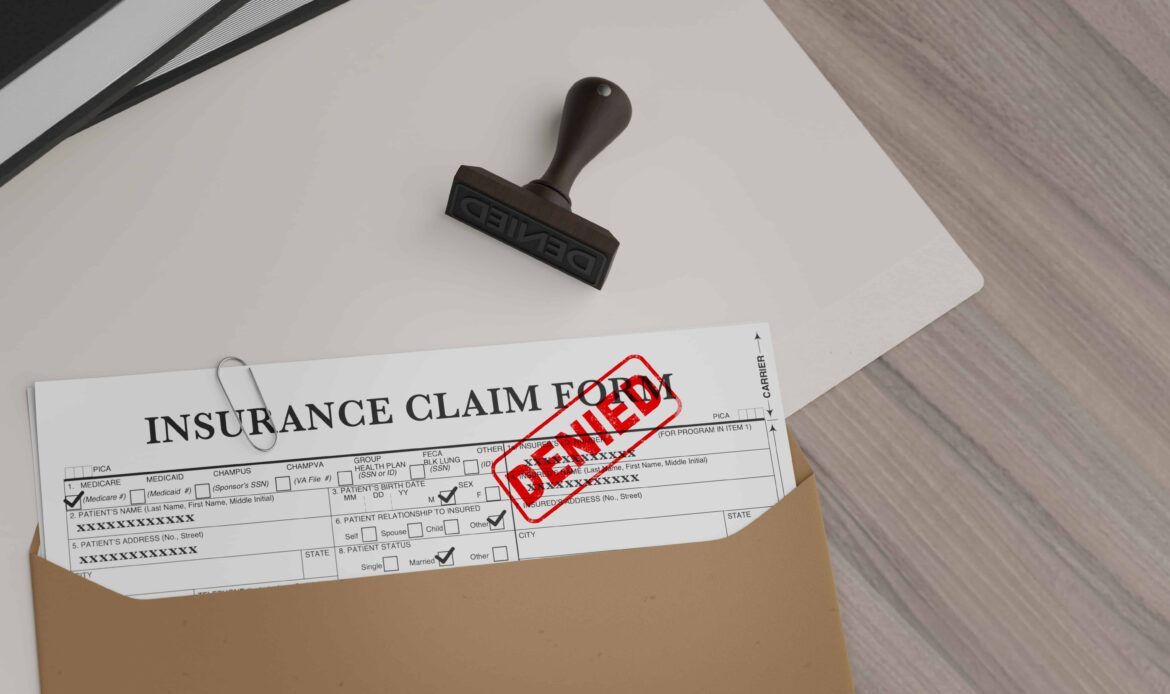
Getting a formal denial letter after a serious injury feels arbitrary and unfair, but it rarely actually is. Insurance companies deny claims using a fairly predictable playbook, built around specific language, specific timing, and specific gaps in documentation that most claimants never think to close.
Understanding how insurance companies deny claims before you file, or right after a denial letter lands, changes how the rest of the process goes. This piece breaks down the most common denial tactics used today, how Texas law limits what an insurer can actually get away with, and what a denial does to the value of a claim if it goes unchallenged.
Key Takeaways about How Insurance Companies Deny Claims
- Insurance companies commonly deny claims using disputed liability, alleged pre-existing conditions, and missing paperwork rather than a single clear reason
- Texas law places specific deadlines and good-faith obligations on insurers through the Texas Insurance Code, including a 15-business-day decision window
- A denial does not automatically end a claim, and many denials get reversed once additional documentation or legal pressure is applied
- Bad-faith conduct by an insurer can create a separate claim beyond the original injury or property loss
- Car accident claims often involve more than one insurer, which changes how a denial gets contested
What Are the Most Common Insurance Claim Denial Tactics?

Insurers rely on a fairly narrow set of insurance claim denial tactics across most claims they reject, and recognizing the pattern is the first real step toward challenging it. Most of these tactics are not outright lies in the strict legal sense. They are aggressive interpretations of ambiguous facts, applied consistently in the insurer’s favor rather than the claimant’s.
- Disputing liability, even when the evidence points clearly at their policyholder
- Alleging a pre-existing condition caused the injury rather than the incident itself
- Claiming the claimant missed a paperwork deadline or failed to provide required proof of loss
- Arguing the reported injuries do not fit how the crash was described
- Citing a policy exclusion that was never clearly explained at the time of purchase
- Using a recorded statement, taken before the claimant fully understood their injuries, to argue inconsistency later
- Sending an independent medical exam request to a doctor with a documented pattern of favoring insurers
These tactics rarely appear alone. A denial letter often stacks two or three of these tactics together, which makes the letter look more thorough than the underlying justification actually is. A claimant reading one of these letters for the first time often assumes the insurer did a careful investigation, when in reality the letter may be a template with the specific facts of the claim inserted into a handful of standard denial paragraphs.
Car Accident Claim Denials Have Their Own Patterns
Car accident claim denials follow a slightly different pattern than other injury claims, largely because more than one insurance policy is usually involved. Which insurer issues the denial changes what the argument is actually about.
When the At-Fault Driver’s Insurer Disputes Liability
An at-fault driver’s insurer will often dispute liability outright, arguing their policyholder was not actually at fault or that the claimant shares most of the responsibility. In Texas, that argument matters more than it might elsewhere, since a claimant found more than 50 percent at fault cannot recover anything at all, which gives an insurer a strong incentive to push the fault percentage as high as possible.
Uninsured and Underinsured Motorist Denials
Uninsured and underinsured motorist claims bring a strange dynamic, since the claimant is effectively negotiating against their own insurance company. Insurers handling these claims sometimes treat the policyholder more adversarially than they would a third-party claimant, disputing injury severity or arguing the crash was less serious than the medical bills suggest.
Multi-Vehicle Crashes and Shifting Blame
Multi-vehicle crashes complicate denials further. When three or more vehicles are involved, each insurer often points to a different driver as primarily at fault, and a claimant can end up caught between several companies each denying responsibility while pointing at each other.
Delay as a Denial Tactic
Delay is its own denial tactic in disguise. An insurer that never issues a formal denial, but also never approves a claim, can run out the clock on a claimant’s patience without ever putting a rejection in writing, avoiding the specific legal exposure that comes with a documented denial.
How Denials Affect the Value of Your Settlement
How denials affect your settlement often gets overlooked in the rush to get a claim reopened. The delay itself moves the number, separately from whatever the insurer eventually agrees to pay.
A denial, even one that eventually gets reversed, tends to lower the ceiling on what an insurer is willing to negotiate afterward, since the insurer has already put its position on the record, and reversing that position fully can feel like an admission it is reluctant to make.
Every month a claim sits denied is a month of medical bills, lost income, and mounting pressure on the claimant to accept whatever number finally gets offered. Insurers are aware of that pressure, and a slow reconsideration process is not always accidental. Some claimants accept a lowball settlement simply because the alternative, an extended fight with no fixed end date, feels worse than a smaller number today.
What a Reopened Claim Needs
Once a claim is reopened after a denial, it typically needs stronger documentation than it would have needed the first time around, since the insurer has already shown a willingness to reject the file on thinner grounds. That often means additional medical opinions, a more detailed accident reconstruction, or witness statements that were not gathered during the initial claim.
The gap between a first denial and a final resolution can also change who handles the claim on the insurer’s side. A file that gets escalated after a denial sometimes moves to a different adjuster or a legal department, which can either speed up a resolution or slow it down further depending on how the insurer chooses to respond.
Is There Such a Thing as Insurance Bad Faith in Texas?
Texas recognizes two separate paths for holding an insurer accountable beyond an ordinary denial. One comes from court decisions and the other from the Insurance Code, and both can apply to the same claim.
Common Law Bad Faith
Common law bad faith, established through Texas Supreme Court precedent, requires an insurer to deal with claimants in good faith and imposes liability when it denies a claim without a reasonable basis for doing so, or when it fails to properly investigate a claim before rejecting it outright.
Statutory Bad Faith Under Chapter 541
Statutory bad faith comes from the Texas Insurance Code directly. Under Section 541.060, it is an unfair settlement practice for an insurer to fail to attempt, in good faith, a prompt and fair settlement once liability has become reasonably clear. The statute also prohibits misrepresenting policy provisions, failing to properly investigate a claim before denying it, and requiring a claimant to submit unnecessary paperwork simply to delay the process.
The Prompt Payment of Claims Act
The Texas Prompt Payment of Claims Act adds hard deadlines on top of those good-faith duties. An insurer generally must acknowledge a claim within 15 days, and once it has everything it needs, accept or reject the claim in writing within 15 business days. Missing these deadlines without a valid reason can trigger statutory penalty interest of 18 percent annually, plus attorney’s fees, on top of whatever the claim was worth in the first place.
These two paths often work together in practice. A claim denied without proper investigation can violate the good-faith standard under Chapter 541. That same claim sitting unresolved past the statutory deadline can separately trigger the penalty interest available under Chapter 542. A claimant does not have to choose one legal theory when both apply to the same facts.
This is general legal information, not legal advice, and whether a specific denial rises to bad faith depends on the full record of how the claim was handled, including internal notes and correspondence that are not always visible to the claimant until litigation begins.
How Do You Fight an Insurance Denial in Texas?
Fighting a denial starts with the letter itself. Insurers are required to state a specific reason for rejecting a claim, and a vague or generic denial is often a sign the file was not fully investigated before the decision came down. Reading that letter line by line carefully, rather than skimming it out of frustration, usually reveals exactly which piece of evidence the insurer says is missing.
- Request the denial in writing if it was delivered verbally, along with the specific policy language the insurer relies on
- Gather medical records and provider statements that directly address whatever reason the insurer gave
- File a complaint with the Texas Department of Insurance if the denial appears to violate prompt payment or fair-dealing rules
- Request the insurer’s full claim file, including adjuster notes, through the applicable discovery process if litigation becomes necessary
- Track every date connected to the claim, including when it was reported, when documents were submitted, and when the denial letter arrived
Most denials get resolved through renewed documentation and steady pressure rather than a lawsuit, but a pattern of unreasonable denials across multiple claims can support a broader case against an insurer’s ongoing practices. An insurer that knows a claimant is actively tracking deadlines and citing specific statutory obligations tends to move faster than one dealing with a claimant who simply accepts the first answer given.
FAQs: How Insurance Companies Deny Claims
Insurers rarely explain a denial in plain terms, so these are the questions that come up most often once a letter arrives.
Why was my injury claim denied?
Insurers cite one specific reason in the denial letter, but the underlying cause is usually disputed liability, an alleged pre-existing condition, or a claimed paperwork gap rather than a single obvious problem with the claim. The stated reason and the real reason are often not the same thing.
Can an insurance company deny a claim without giving a reason?
No. Texas law requires insurers to state the specific reason for a denial in writing, and a vague or boilerplate explanation can itself be evidence of an unfair settlement practice under the Texas Insurance Code.
How long does an insurance company have to make a decision in Texas?
Generally 15 business days after receiving everything it needs to evaluate the claim, though this deadline only starts once all requested documentation has been submitted, so an insurer that keeps requesting new items can technically delay the clock.
What should I do immediately after receiving a denial letter?
Read the stated reason carefully, gather any documentation that directly addresses it, and avoid accepting the denial as final before requesting the insurer’s specific justification in writing, since a verbal denial often gets softened once it has to be put in writing.
Does a denied claim mean I have no case at all?
Not necessarily. Many denials get reversed once additional medical evidence, witness statements, or legal pressure is applied to the insurer, particularly when the original denial relied on incomplete information.
Can I still recover money if my own insurance company denied my claim?
Yes, depending on the specific type of coverage involved. Uninsured motorist, health, and other first-party claims generally follow the same prompt payment and good-faith rules as third-party claims, even though the insurer is technically supposed to be on your side of the transaction.
Is there a deadline for suing an insurance company over a bad-faith denial?
Yes, and it can differ from the deadline for the underlying injury claim, so any bad-faith concern should be reviewed as early as possible rather than after the original claim resolves and evidence becomes harder to gather.
Talk to Someone Before You Accept a Denial as Final
 A denial letter is a starting position, not a final answer, and insurers count on most people treating it as the end of the conversation. Reviewing the specific reason given, along with the documentation the insurer already has on file, often reveals exactly where the claim was undervalued or misread, and that review is usually most useful before a claimant sends anything further to the insurer without a plan.
Our Austin personal injury attorneys review denied and delayed claims regularly, whether the denial came from an at-fault driver’s insurer, a claimant’s own policy, or a first-party coverage dispute entirely unrelated to a car accident. A short conversation is often enough to tell whether a denial was reasonable or worth challenging further, and whether the facts of your case point toward an ordinary appeal or a stronger bad-faith argument under Texas law.
Call (800) 488-7840 today to walk through your denial letter and find out exactly what comes next.