

A slip-and-fall at a Grand Junction grocery store can become a legal dispute before the injured person even understands what happened. The store may clean the area, move products, review video, write an internal report, and notify an insurer within hours.
The claim often turns on evidence the customer does not control. Under Colorado law, the key questions usually involve why the person was on the property, what hazard caused the fall, what the store knew, and what evidence remains.
At a Glance: Slip-and-Fall at a Grand Junction Grocery Store
- A grocery store customer is usually treated as an invitee under Colorado premises liability law
- Colorado law may allow an invitee to recover when a landowner unreasonably failed to use reasonable care to protect against dangers the landowner knew or should have known about
- Evidence can disappear quickly after a grocery store fall because spills are cleaned, displays are moved, and surveillance footage may not be saved for long
- Many Colorado premises liability claims have a two-year deadline, but the correct deadline depends on the facts and parties involved
- A claim may involve the store operator, property owner, maintenance company, cleaning contractor, or another party with control over the area
Colorado Law for Slip and Fall at a Grand Junction Grocery Store Claims
Colorado law for slip and fall at a Grand Junction grocery store claims usually starts with the state’s landowner liability rules. The Colorado Premises Liability Act controls many injury claims involving unsafe conditions on real property.
A grocery store fall may involve a spill, tracked-in weather, broken flooring, unsafe mats, poor lighting, cluttered aisles, loose produce, leaking refrigeration, or a hazard in the parking lot. The legal question is not only whether the condition existed. The question is whether the evidence shows the store or another responsible party can be held liable under Colorado law.
Grocery Store Customers Are Usually Invitees
Grocery store customers are usually invitees because they enter the property to shop and transact business with the store. Visitor status matters because Colorado law gives different rules to invitees, licensees, and trespassers.
An invitee claim usually focuses on whether the landowner used reasonable care to protect against dangers the landowner knew about or should have known about. That makes store inspections, employee reports, cleanup logs, and video evidence especially important.
The Store Is Not Automatically Responsible
The store is not automatically responsible just because someone fell. A strong claim needs evidence that connects the fall to a property hazard and connects that hazard to the store’s legal duty.
For example, a fresh spill that appeared seconds before a fall may be treated differently from a leak that employees ignored for an hour. Timing, visibility, employee knowledge, and inspection practices can all affect the claim.
Who Counts as the Landowner?
The landowner may be more than the company name on the front of the grocery store. Colorado law can include a person or entity in possession of the property, an authorized agent, or a party legally responsible for the condition of the property.
That can matter in a Grand Junction shopping center. The store may control the aisles, while another company may control the parking lot, sidewalk, entryway, landscaping, or snow removal. A complete claim review should identify who controlled the exact area where the fall happened.
Evidence That Matters After a Slip and Fall at a Grand Junction Grocery Store
Evidence after a slip and fall at a Grand Junction grocery store matters because the store and insurer may start building their version of events right away. The injured person may only have a short window to identify what proof exists.
A claim may depend on showing what caused the fall, how long the hazard existed, whether employees knew about it, and whether the store followed reasonable inspection or cleanup procedures.
| Evidence Type | Why It May Matter | Common Problem |
|---|---|---|
| Surveillance video | May show the fall, hazard, employees, and timing | Footage may be overwritten |
| Incident report | May record the store’s first account of what happened | Customer may not receive a copy |
| Photos | May show the hazard, floor, lighting, mats, or warning signs | Area may be cleaned quickly |
| Witness names | May support what the customer saw or felt | Witnesses may leave before contact details are gathered |
| Store logs | May show inspections, cleanup, or missed checks | Records are usually controlled by the store |
| Medical and billing records | May connect injuries and expenses to the fall | Gaps can create insurance disputes |
Video Can Be One of the Most Important Records
Video can be one of the most important records because it may show what happened before and after the fall. It may capture employees walking past the hazard, another customer dropping an item, or the length of time a spill remained on the floor.
The problem is access. Grocery stores usually control their own surveillance systems. If footage is not preserved, it may be overwritten before the injured person knows it existed.
Incident Reports Need Careful Review
Incident reports need careful review because they may contain the store’s first written version of the fall. The report may list the time, location, employees involved, witnesses, and what the store believed caused the incident.
The report may also leave out details the injured person remembers. That is why photos, receipts, witness names, and a personal timeline can help fill gaps in the record.
Photos Can Show Conditions That Change Fast
Photos can show conditions that change fast, including a wet floor, torn mat, missing sign, leaking cooler, uneven surface, or cluttered aisle. Grocery stores can return an aisle to normal quickly after a fall.
Even when photos are taken later, they may still help show the layout, lighting, sight lines, shelf placement, or location of nearby displays. Those details can support questions about whether the hazard was reasonably noticeable or preventable.
Why Do Grocery Store Slip and Fall Claims Get Disputed?
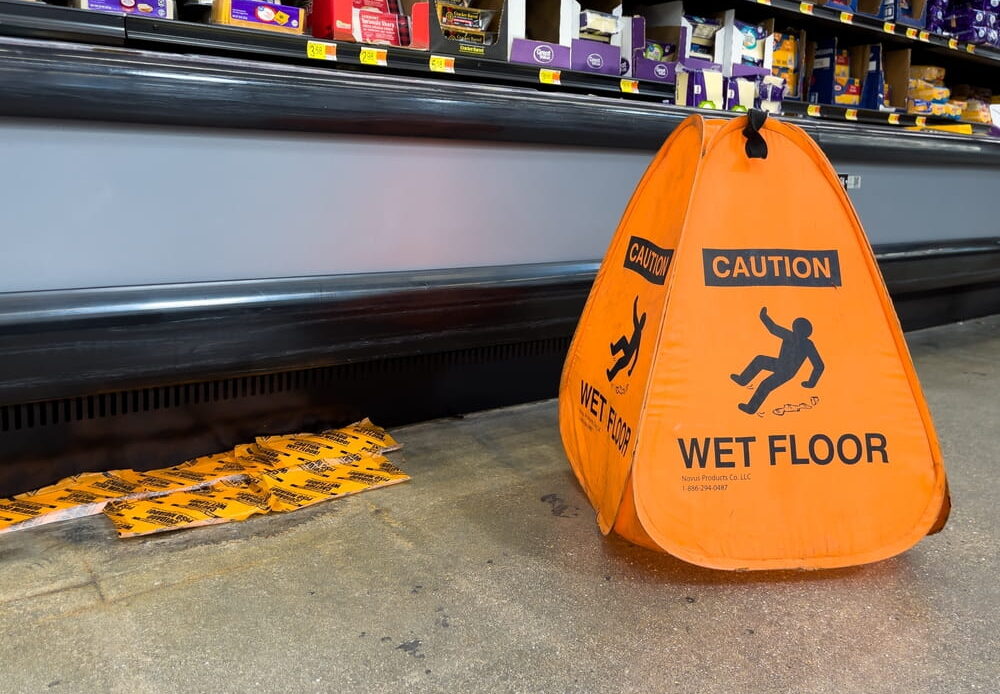
Grocery store slip and fall claims get disputed because the store and insurer may argue that the hazard was obvious, temporary, recently created, or not connected to the injury. They may also claim the customer was not paying attention.
These disputes do not always match the full evidence. A customer may have been using ordinary care while the store failed to notice a spill, leaking freezer, loose mat, or unsafe display.
The Store May Dispute Notice
The store may dispute notice by arguing that no employee knew about the hazard and that it did not exist long enough to be discovered. Notice is often one of the main issues in a Colorado grocery store fall claim.
Evidence can push back against that argument. Video, inspection logs, employee statements, customer complaints, product residue, track marks, or repeated hazards in the same area may help show what the store knew or should have known.
Comparative Fault May Become an Issue
Comparative fault may become an issue if the insurer says the customer caused or contributed to the fall. These arguments may focus on footwear, speed, phone use, warning signs, where the customer was looking, or whether the hazard was visible.
A comparative fault argument is not the same as proof. The evidence should be reviewed before accepting the insurer’s version of why the fall happened.
Prior Conditions Can Be Used Out of Context
Prior conditions can be used out of context when the insurer looks for another reason to discount the claim. Old injuries, mobility limits, prior pain, or unrelated medical history may become part of the dispute.
The stronger question is what changed after the fall. A careful before-and-after comparison can help separate prior issues from new harm or worsened limitations.
Legal Rights After a Slip and Fall at a Grand Junction Grocery Store
Legal rights after a slip and fall at a Grand Junction grocery store depend on the evidence, the visitor-status rules, the location of the hazard, and the parties responsible for the property. A claim may involve more than one company.
Colorado’s general limitation statute gives many personal injury claims a two-year filing deadline. Some claims have different timing rules, especially when a public entity or another special defendant is involved.
Aisle, Entryway, and Parking Lot Claims Can Differ
Aisle, entryway, and parking lot claims can differ because different parties may control different parts of the property. A spill in a grocery aisle may involve store employees. Ice near an entrance may involve store maintenance, landlord duties, or a contractor. A parking lot fall may involve a property owner or management company.
The exact location matters. A fall “at the grocery store” is not specific enough for a liability review. The claim needs the aisle, entrance, checkout area, bathroom, sidewalk, ramp, or parking-lot location.
Deadlines Are Not the Only Timing Problem
Deadlines are not the only timing problem because key evidence can vanish long before the statute of limitations expires. Video may be overwritten, witnesses may be hard to identify, and store conditions may change.
This is why early documentation can matter. The longer a claim waits, the easier it may be for the insurer to argue that missing evidence would not have helped.
Settlement Offers May Not Include Future Effects
Settlement offers may not include future effects if the insurer focuses only on early bills. A grocery store fall can lead to missed work, household limitations, follow-up care, transportation costs, and changes in daily routines.
A claim review should look at both current records and likely future impact. Accepting a quick offer can close the claim before the full picture is clear.
Practical Evidence to Organize After a Grand Junction Grocery Store Fall
Practical evidence after a Grand Junction grocery store fall can help show what happened, who controlled the area, and how the injury affected daily life. Many claimants find it helpful to gather records before speaking with a lawyer.
Helpful materials may include:
- The store name and exact Grand Junction location
- The date and approximate time of the fall
- The aisle, entrance, checkout area, restroom, sidewalk, or parking-lot location
- Photos of the hazard, floor, signs, lighting, mats, or displays
- Names and contact information for witnesses
- The incident report number or employee names
- Receipts, bank records, or loyalty-card records showing the visit
- Medical bills, appointment records, and insurance letters
- Notes about missed work, missed responsibilities, and changed routines
These materials can help identify what evidence should be requested from the store, property owner, insurer, or other parties.
Receipts Can Help Confirm Timing
Receipts can help confirm timing because they show when the customer was at the store. A loyalty-card record, bank statement, pharmacy receipt, or grocery receipt may help connect the fall to a specific date and time.
That timing can help when requesting video, incident reports, and employee records. A general estimate may be less useful than a time window tied to a receipt.
Witnesses Can Fill Gaps in the Store Record
Witnesses can fill gaps in the store record because they may have seen the hazard, the fall, employee reactions, or cleanup efforts. A witness may also remember whether warning signs were present.
Witness information can be hard to recover later. A name, phone number, or short written note can become important if the store’s version of events changes.
Daily-Life Notes Can Support Damages
Daily-life notes can support damages by showing how the fall affected work, household tasks, driving, errands, sleep, and family responsibilities. These notes do not replace medical records, but they can explain what bills alone do not show.
A simple timeline may be enough. It can include the fall, first symptoms, appointments, missed work, insurance calls, and the activities that became harder afterward.
Slip and Fall at a Grand Junction Grocery Store: Questions Answered by Our Grand Junction Attorneys
Can I bring a claim if there was no wet floor sign?
A missing wet floor sign may support a claim, but it does not prove the case by itself. The evidence still needs to show what caused the fall, how long the hazard existed, and whether the store knew or should have known about it.
What if I fell in the grocery store parking lot?
A grocery store parking-lot fall may involve the store, landlord, property manager, snow-removal contractor, maintenance company, or another party. The exact location matters because control over the parking lot may differ from control over the store interior.
Can the store refuse to give me the video?
A store may not voluntarily give video to an injured customer. That does not mean the video is unavailable forever. An attorney may send a preservation request and pursue the footage through the claim or litigation process if needed.
What if I did not report the fall before leaving the store?
Not reporting the fall before leaving can make the claim harder, but it does not automatically end it. Other evidence may still help, including receipts, witness statements, medical records, photos, and a timeline showing when the fall happened.
Getting the Evidence Before the Story Changes

A grocery store fall can become a dispute over details that seemed minor at the time. The aisle number, spill source, warning sign, employee response, receipt time, and video angle may all matter once the insurer reviews the claim.
Slingshot Law Injury Attorneys helps injured people in Grand Junction and across Mesa County evaluate premises liability claims. Contact the injury attorneys at Slingshot Law to talk through the specific facts of your grocery store fall and what your claim may actually be worth. For a free consultation, call (800) 488-7840.