
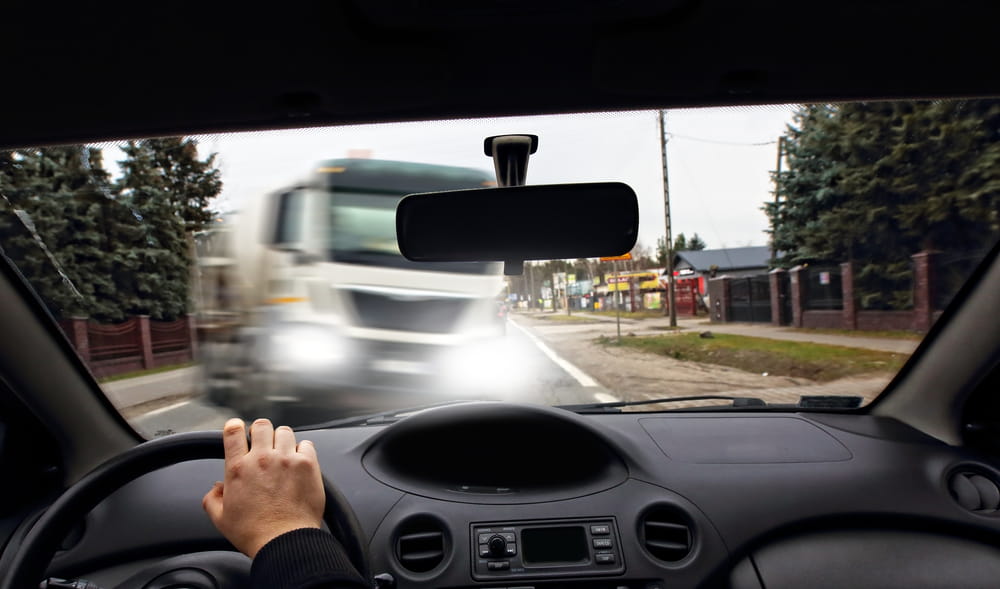
Grand Junction’s most dangerous roads for car accidents are not always the roads that feel the most chaotic. Local crash patterns show that repeated collisions often happen on familiar corridors where commuters, visitors, commercial vehicles, pedestrians, and local business traffic all overlap.
Recent Mesa County crash-dashboard reporting points to I-70, North Avenue, Patterson Road, the I-70 Business Loop, and U.S. Highway 6 and 50 as the highest-crash corridors in the area.
What to Know About Grand Junction’s Most Dangerous Roads for Car Accidents
- Mesa County’s 2024 crash-dashboard summary reported about 2,400 crashes in the mapped portion of the county, including 77 serious injuries and 17 fatalities
- Five corridors accounted for about 30 percent of mapped Mesa County crashes in 2024: I-70, North Avenue, Patterson Road, the I-70 Business Loop, and U.S. Highway 6 and 50
- The intersection of 12th Street and North Avenue had the highest reported 2024 intersection crash count in the dashboard summary, with 31 crashes — CDOT notes Colorado crash-dashboard data should be treated as preliminary and subject to change
What Are Grand Junction’s Most Dangerous Roads for Car Accidents?
Grand Junction’s most dangerous roads for car accidents, based on recent Mesa County crash-dashboard reporting, are the corridors with the highest reported crash counts in 2024. These numbers help identify patterns, but they do not decide who caused any individual collision.
| # | Road or Corridor | 2024 Crashes | Risk Profile |
|---|---|---|---|
| 1 | Interstate 70 | 210 | High speeds, merging traffic, regional travel, and commercial vehicles |
| 2 | North Avenue | 180 | Dense intersections, business access, transit activity, and pedestrian movement |
| 3 | Patterson Road | 156 | Neighborhood, school, medical, retail, and east-west commuter traffic |
| 4 | I-70 Business Loop | 99 | Downtown access, construction zones, regional retail, and local commuting |
| 5 | U.S. Hwy 6 & 50 | 83 | Highway traffic, turning movements, and connections across Mesa County |
The crash count table gives a useful starting point because it separates repeated risk from one-time events. A single bad crash can happen almost anywhere. A corridor with dozens or hundreds of crashes suggests that traffic volume, road design, access points, signals, speed, or driver behavior may be creating recurring conflict. (The Business Times)
Which Road Ranks First Among Grand Junction’s Most Dangerous Roads for Car Accidents?
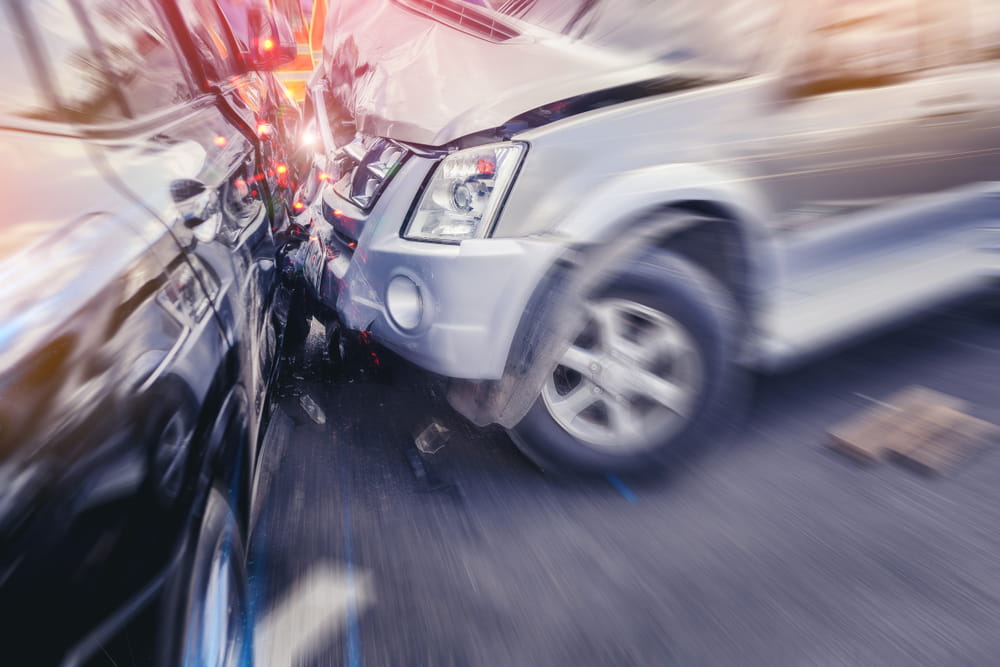
I-70 ranks first in the 2024 Mesa County dashboard summary, with 210 reported crashes. Interstate crashes may involve higher speeds, lane changes, merging vehicles, commercial trucks, and drivers passing through the Grand Valley. After an I-70 collision, the mile marker, direction of travel, lane position, weather, and responding agency can all affect the evidence review.
Why Is North Avenue One of Grand Junction’s Most Dangerous Roads for Car Accidents?
North Avenue is one of Grand Junction’s most dangerous roads for car accidents because it combines heavy local traffic with frequent intersections, businesses, transit activity, pedestrians, and bicyclists.
Why Does Patterson Road Appear So High in the Crash Data?
Patterson Road appears high in the crash data because it carries a mix of neighborhood traffic, retail trips, school travel, medical-office traffic, and east-west commuter movement. The 2024 dashboard summary reported 156 crashes on Patterson Road, placing it third among the listed corridors.
Why Do Grand Junction’s Most Dangerous Roads for Car Accidents See Repeat Crashes?
Grand Junction’s most dangerous roads for car accidents see repeat crashes because traffic volume, speed, intersections, business access, and vulnerable road users often overlap in the same places. A familiar road can still be risky when drivers face the same conflict points every day.
Traffic Volume Matters
Traffic volume matters because more vehicles create more opportunities for sudden braking, unsafe turns, lane changes, and merging conflicts. Roads such as I-70, North Avenue, Patterson Road, and the I-70 Business Loop move different kinds of traffic at once. A local driver, a visitor, a delivery driver, and a commuter may all approach the same intersection with different expectations.
This is one reason crash location matters in an car accident claim. The more complex the traffic pattern, the more important it may be to review photos, vehicle positions, witness accounts, signal timing, nearby businesses, and available camera footage.
Intersections Make Fault Disputes Harder
Intersections make fault disputes harder because several people may describe the same few seconds differently. Mesa County’s crash-dashboard reporting identified rear-end and broadside crashes as common crash types, especially in urban areas where intersections and congestion create more vehicle-conflict points.
An insurance adjuster may focus on one detail, such as who had the green light or who was turning left. A fuller review may consider lane position, vehicle damage, traffic controls, sight lines, nearby driveways, and whether any driver changed lanes or braked suddenly before impact.
Can Construction Zones Affect a Grand Junction Car Accident Claim?
Construction zones can affect a claim when temporary lane shifts, reduced speeds, detours, or sidewalk closures change how drivers and pedestrians move through an area. CDOT describes I-70B as a backbone of the Grand Junction transportation system and notes that its improvement project serves regional retail, commuters, employment centers, neighborhoods, and other local destinations.
Construction details can be time-sensitive. Signs, cones, barriers, lane markings, and detours may change from week to week. If a crash happened near roadwork, the date, time, direction of travel, and exact block may help determine what traffic pattern existed at the moment of the collision.
Do Pedestrians, Bicyclists, and Motorcyclists Change the Risk Picture?
Pedestrians, bicyclists, and motorcyclists change the risk picture because they have less physical protection when a collision occurs. Busy roads such as North Avenue and Patterson Road are not only vehicle corridors — they also connect people to schools, stores, medical offices, bus stops, workplaces, and neighborhoods.
That local context matters. A crash involving a pedestrian near a bus stop may require different evidence than a rear-end collision between two vehicles. Lighting, crosswalk placement, traffic controls, lane width, sight lines, and nearby construction may all become relevant.
How Does Crash Location Affect a Grand Junction Car Accident Claim?
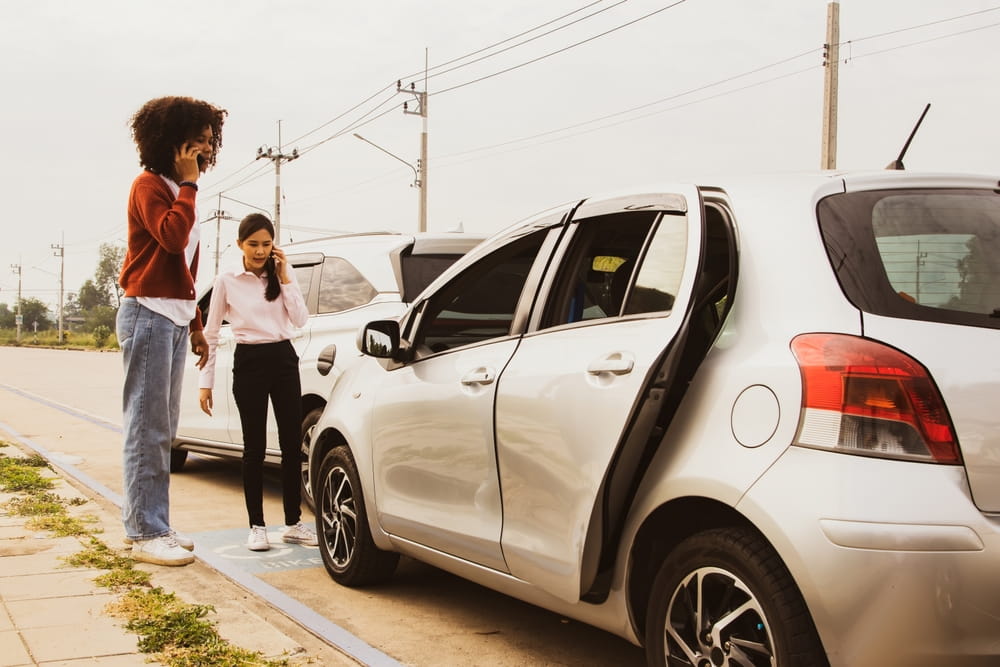
Crash location affects a Grand Junction car accident claim because it helps identify what evidence may exist, who may have it, and which agency may have responded. A crash near downtown Grand Junction, Mesa Mall, North Avenue, or an I-70 interchange may involve different cameras, witnesses, traffic signals, and reports.
Does a Dangerous Road Prove Who Was at Fault?
A dangerous road does not prove who was at fault. Crash data identifies patterns, not legal responsibility. CDOT states that Colorado crash-dashboard data should be regarded as preliminary and subject to change, which means the data is useful for safety analysis but not a final decision about a specific claim.
A person injured on a high-crash corridor still needs evidence tied to that collision — the police report, photographs, insurance records, repair estimates, witness statements, medical billing records, and any available camera footage.
Colorado Deadlines Can Affect a Claim
Colorado deadlines can affect a claim because waiting too long may limit legal options. Colorado’s general limitation statute provides a three-year deadline for certain actions connected to motor-vehicle financial responsibility and related motor-vehicle claims. Cases involving a public entity can raise separate notice issues, including a 182-day written notice requirement in certain claims.
This is not just a filing-date issue. Evidence can also become harder to collect as time passes. Video may be overwritten, witnesses may be harder to reach, and construction-zone conditions may change.
More Than One Driver Can Share Blame
More than one driver can share blame in a Colorado crash, and that can affect compensation. Colorado follows comparative negligence principles, which can reduce recovery based on a person’s percentage of fault. If the injured person’s negligence is equal to or greater than the negligence of the person being sued, recovery may be barred.
On Grand Junction’s most dangerous roads for car accidents, shared-fault arguments may involve speed, following distance, lane changes, distraction, unsafe turns, or whether a driver had enough time to react. Strong location-specific evidence can help respond to those arguments.
Helpful Information After a Crash on Grand Junction’s Most Dangerous Roads for Car Accidents
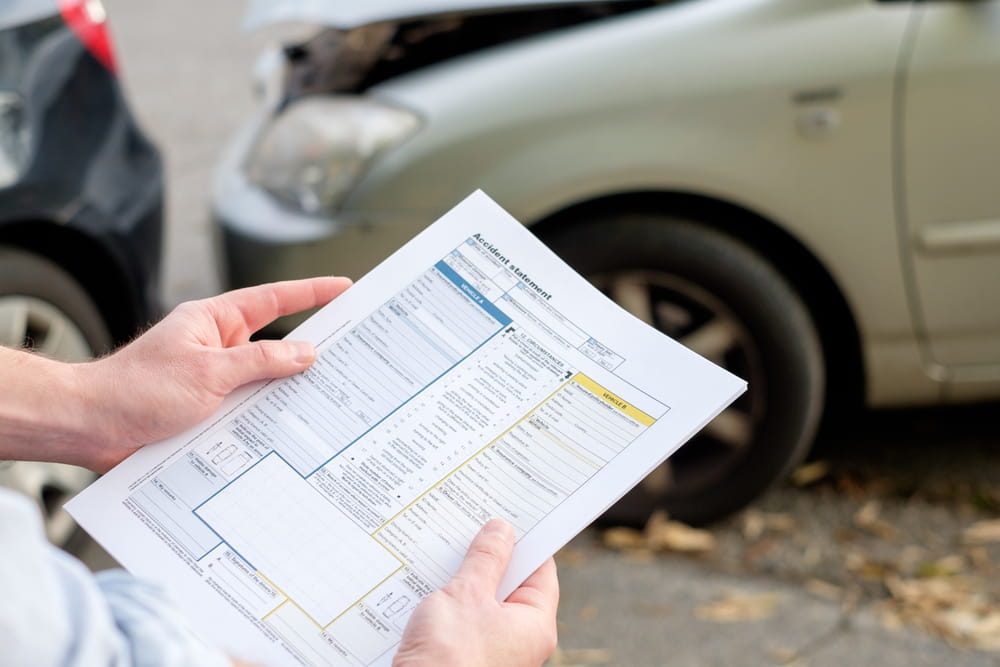
Strong documentation may help connect the crash location to the insurance and legal issues. Many injured drivers and passengers find it helpful to organize location details, insurance records, and expense documents before a consultation.
What Records Help After a Crash on Grand Junction’s Most Dangerous Roads for Car Accidents?
Useful records may include the crash report number, responding agency, exact road or cross street, photos, repair estimates, towing receipts, rental car records, insurance letters, claim numbers, and witness contact information.
Records tied to the exact location can be especially useful on corridors like I-70, North Avenue, Patterson Road, and I-70B, where camera access and traffic patterns may vary block by block.
A simple timeline can also help. Many people write down where they were coming from, where they were going, which direction they were traveling, what lane they were in, and what they remember seeing before the crash. That kind of location detail can help an attorney compare the person’s memory against the crash report and physical evidence.
Local Details
Local details can support the evidence review by narrowing where to look. A crash near 12th Street and North Avenue may require a different evidence search than one near the I-70B work zone or the Patterson Road sidewalk construction.
CDOT explains that crash records are processed for engineering and safety analysis, but individual claim evidence may still need to come from the responding agency, businesses, insurers, witnesses, and the vehicles involved. Local details may also help explain why a crash happened — a driveway-heavy commercial stretch, a school-area crossing, a narrowed construction lane, or an unfamiliar downtown detour can affect how people move through the roadway.
What Insurance Information Should Be Reviewed After a Grand Junction Crash?
Insurance information should be reviewed carefully because Colorado requires vehicle owners to carry liability insurance, but minimum coverage may not fully reflect the losses in a serious crash. Colorado’s required minimum coverage is $25,000 for bodily injury or death to one person, $50,000 for bodily injury or death to all people in one accident, and $15,000 for property damage.
A claim review may involve more than the at-fault driver’s liability policy. Depending on the facts, uninsured motorist coverage, underinsured motorist coverage, medical payments coverage, commercial policies, or multiple household policies may need to be considered.
Grand Junction’s Most Dangerous Roads for Car Accidents: Questions Answered by Our Grand Junction Attorneys
Can a passenger bring a claim after a crash on North Avenue or I-70?
A passenger may have a claim if another person’s negligence caused the crash. The responsible party could be the other driver, the driver of the passenger’s vehicle, or more than one driver. Passenger claims often require a careful insurance review because several policies may apply.
What if the crash happened outside Grand Junction but still in Mesa County?
A crash outside Grand Junction may still involve Colorado law, Mesa County agencies, CDOT data, and local insurance questions. The exact location matters because it can affect the responding agency, report access, witnesses, roadway design, and available insurance coverage.
Will the police report decide my Grand Junction car accident case?
A police report can be important, but it usually does not decide the entire case. Insurance companies may still dispute fault, damages, or causation. Other evidence, such as photos, witness statements, repair records, medical billing records, and camera footage, may affect how the claim is evaluated.
Do I need a lawyer after a crash on one of Grand Junction’s most dangerous roads?
Some minor property-damage claims may be handled without a lawyer, but injury claims can become more complicated when fault, insurance limits, medical bills, missed work, or shared blame are disputed. A consultation can help identify what evidence may be missing and whether the insurance company’s position matches the available facts.
Getting Answers Without the Pressure

A crash on a familiar road can leave people with practical questions: who pays, what evidence matters, and whether the insurance company’s version of events is complete. Those questions are easier to sort through when the location, records, and Colorado rules are reviewed together. Contact the injury attorneys at Slingshot Law to talk through the specific facts of your Grand Junction crash and what your claim may actually be worth.
