

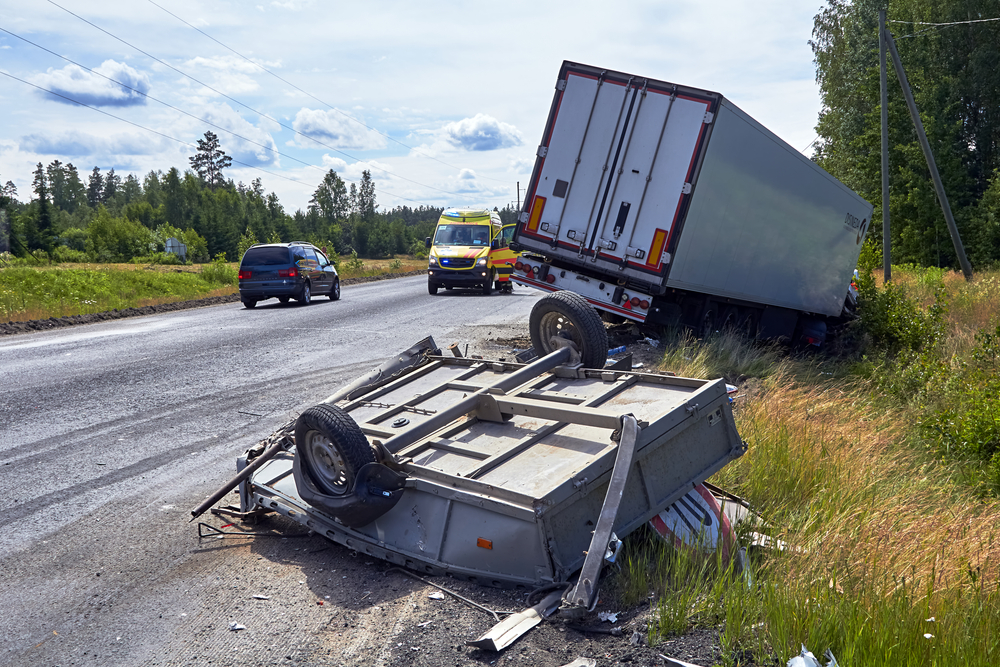
When a trucking company’s insurer calls after a serious crash in Austin, it isn’t reaching out to help. Trucking company insurance tactics in Texas are designed to limit payouts from the moment a claim opens, and the phone call that seems like a routine follow-up is often the first move in that strategy.
A truck accident lawyer understands what those calls are for and how to protect an injured victim’s claim before anything is said that can be used against them.
The speed of that contact surprises most people. A crash happens on I-35 at noon, and by evening, there’s a voicemail from an adjuster who sounds helpful, empathetic, and eager to resolve things quickly. That tone is deliberate.
Commercial trucking carriers maintain rapid-response teams and experienced claims handlers precisely because serious truck accident claims involve significant exposure, and early intervention limits that exposure in ways later intervention cannot.
Knowing which tactics adjusters use, what each one is designed to accomplish, and how to counter them gives injured victims a fighting chance against an opponent that has been doing this far longer than they have.
The Lowdown on Trucking Company Insurance Tactics in Austin
- Trucking company insurers often contact crash victims within hours of an accident, long before those victims understand the full extent of their injuries or the value of their claim
- Recorded statements made to an insurance adjuster without legal guidance can be used to limit or deny a claim regardless of how routine the request sounds
- A lowball settlement offer in a truck accident case in Austin is designed to close the file before a victim understands what their injuries will actually cost
- Social media monitoring by trucking company insurers is real, routine, and has been used successfully to challenge injury claims
- Once an attorney is retained, all insurer communication routes through that attorney, removing the most dangerous early-stage tactics from the equation
Lowball Settlement Truck Accident Offers in Austin: Why Fast Money Is Rarely Fair Money
A fast settlement offer after a serious truck accident in Austin is almost never a fair one. The timing alone signals its purpose. An offer made within days or weeks of a crash, before a victim has completed treatment, received all medical bills, or been evaluated for long-term complications, is structured around what the insurer hopes to pay, not what the claim is actually worth.
Several factors make early offers in truck accident cases particularly inadequate:
- Ongoing medical costs: Injuries like traumatic brain injuries, spinal damage, and orthopedic trauma often require treatment that extends months or years beyond the initial hospitalization, and those future costs aren’t reflected in an early offer
- Lost earning capacity: When an injury affects a victim’s ability to return to their prior occupation, the long-term income impact can significantly exceed near-term wage loss, but that calculation requires time and documentation that doesn’t exist in the first weeks after a crash
- Pain and suffering: Non-economic damages require thorough development and presentation to reflect the full human cost of an injury, and accepting an early settlement waives the right to pursue them further
Signing a settlement agreement closes the claim permanently. Texas law does not provide a straightforward path to reopen a settled claim when injuries turn out to be more serious than initially apparent. The insurer knows this. That knowledge is precisely why the offer comes early.
The Rapid Response Team You Never Knew Existed

Large commercial trucking carriers don’t wait for a lawsuit to start preparing their defense. Many retain accident response firms that deploy to serious crash scenes within hours. Their job is to photograph the scene, interview witnesses, document road conditions, and gather any evidence that supports the carrier’s position before that evidence changes or disappears.
While an injured victim is in the emergency room, the carrier’s team may already be at the scene. By the time a victim is discharged and thinking about their next steps, that team has filed its report.
That asymmetry is not accidental. It reflects a well-funded, practiced response to a situation the carrier’s legal and insurance teams have handled hundreds of times. Countering it requires moving just as quickly on the other side, which is why early legal involvement in Austin truck accident cases is not a luxury. It’s a practical necessity.
Social Media Monitoring After a Truck Accident in Texas
Trucking company insurers and their legal teams monitor the social media profiles of claimants as a standard practice in Texas truck accident cases. Posts, photos, check-ins, and tagged content are all reviewed for anything that contradicts the injury claims being made.
Common examples of how social media content is used against truck accident claimants include:
- Photos at social events: A photo at a family gathering six weeks after a crash, even one where the victim was present only briefly, can be cropped and presented as evidence of full physical function
- Location check-ins: A check-in at a restaurant or store directly contradicts claims of being homebound or severely limited in mobility
- Recovery comments: A comment about feeling better after physical therapy becomes a documented statement about progress that adjusters use to argue the injury has resolved
- Tagged content: Posts by friends or family that tag the victim can surface without the victim ever posting directly
None of those observations require a legal process to obtain. Public social media profiles are accessible to anyone, and nothing prevents an insurer’s claims team from reviewing them daily. The safest approach while a truck accident claim is open is to treat any online activity as potentially visible to the opposing side.
The Independent Medical Examination That Isn’t Independent
When a truck accident claim involves significant injury, the insurer may request that the victim submit to an Independent Medical Examination conducted by a physician of the insurer’s choosing. The name suggests objectivity. The process is something different.
What Makes an IME Less Than Independent
- Financial relationships: IME physicians who regularly work for insurance carriers are paid by those carriers, creating an incentive structure that influences findings
- Brief examinations: IME appointments are often significantly shorter than standard clinical evaluations, limiting the depth of assessment
- Pre-existing condition emphasis: Reports frequently attribute symptoms to conditions that predate the crash, reducing the injury’s connection to the accident
- Carrier-favorable conclusions: Findings that minimize injury severity are used by the insurer to challenge the medical evidence supporting the claim
Texas law gives injured victims certain rights regarding IMEs, including the right to have a representative present. Understanding those rights before submitting to an examination and having legal guidance on how to prepare significantly affects how that process plays out.
Delays as a Tactical Tool in Texas Truck Accident Claims

Not every insurer tactic involves aggressive early action. Some involve calculated inaction. When a carrier’s insurer determines that delay works in its favor, the claims process slows deliberately.
How Deliberate Delay Plays Out in Practice
- Multiplying documentation requests: Insurers request the same records repeatedly or ask for additional documentation in stages, extending the process well beyond what the information actually requires
- Slow response cycles: Adjusters take weeks to respond to communications, creating a pace that exhausts victims who are already managing injuries and financial pressure
- Extended medical approval reviews: Treatment authorizations under applicable coverage receive prolonged review, disrupting care and adding stress to the recovery process
- Manufactured ambiguity: Carriers raise coverage questions or liability disputes in a truck accident claim that require additional investigation, buying time while the victim’s financial situation worsens
The purpose behind each of these is the same: to make a reduced settlement attractive simply because the process has gone on so long. Recognizing delay as a tactic rather than a procedural reality is the first step toward countering it.
When communication channels are controlled through an attorney, the pressure those delays create is absorbed differently than when a claimant is fielding them alone.
What Changes When an Attorney Handles Communication
From the moment Slingshot Law takes a truck accident case, all communication with the trucking company’s insurer routes through our office. That single step removes the recorded statement risk, the early settlement pressure, and the direct adjuster access that makes the early-stage tactics described above possible.
What Happens Immediately After Representation Begins
- Insurer access is cut off: Adjusters can no longer contact the victim directly, eliminating the recorded statement opportunity and the early settlement pressure campaign
- Evidence preservation demands go out: The driver’s qualification file, ELD data, dashcam footage, and maintenance records are requested before retention periods allow destruction
- The rapid response team gets a counterpart: Our independent investigation begins immediately, documenting the scene, securing witness accounts, and building the liability picture before it changes
- Carrier behavior shifts: Insurers respond differently to represented claimants, and the tactics designed to work on unrepresented victims lose their effectiveness
The playing field isn’t level when a well-funded corporate insurer faces an injured victim who doesn’t know what the playbook looks like. It becomes more level when someone who knows that playbook is running the other side.
FAQ on Truck Accidents in Austin, TX
Why is the trucking company’s insurance company calling me so quickly after my Austin accident?
Speed is strategic. Carriers and their insurers want to make contact before a victim retains an attorney, because direct access to a claimant produces recorded statements, early settlement agreements, and admissions that become much harder to obtain once legal representation is in place. The call that sounds like routine claims processing is an opportunity the insurer is trained to use.
Do I have to give a recorded statement to the trucking company’s insurance adjuster in Texas?
No. There is no legal obligation to provide a recorded statement to the at-fault party’s insurer. Your own insurer may have a contractual right to a recorded statement under your policy terms, but that is a separate question from what the opposing carrier’s adjuster is entitled to request. Declining or routing that request through an attorney is a standard protective step in any serious truck accident claim.
How do I know if a settlement offer from a trucking company insurer is fair?
A fair settlement reflects the full scope of current and future medical costs, all lost income including future earning capacity, non-economic damages including pain and suffering, and any applicable punitive exposure. An offer made before treatment is complete and before long-term prognosis is established cannot reflect those figures accurately. An attorney reviews the offer against the documented and projected losses before any response is made.
Can the trucking company’s insurer really use my social media posts against me?
Yes. Public social media content is routinely reviewed by insurance adjusters and defense attorneys in Texas truck accident cases. Posts, photos, and check-ins that appear to contradict injury claims have been used to challenge both the severity of injuries and the impact on daily activities. Pausing public posting while a claim is open is one of the most practical protective steps an injured victim can take.
What is an Independent Medical Examination, and does it benefit me?
An IME is a medical examination requested by the insurer and conducted by a physician of their choosing. Despite the name, the process is not independent in the way the term implies. IME physicians who regularly work for carriers have financial relationships with those carriers, and their reports frequently minimize injury severity. Understanding your rights before submitting to an IME, including having representation present, significantly affects how that process plays out in the claim.
The Playbook Only Works on People Who Don’t Know It Exists
Trucking company insurance tactics in Austin follow a predictable pattern because that pattern works. The rapid response team, the early recorded statement, the fast lowball settlement, the social media monitoring: each step is effective against a victim who doesn’t recognize what’s happening and why. Slingshot Law was built for exactly this fight. Drew Gibbs and Scott Crivelli founded this firm on the conviction that well-funded corporate opponents don’t win by default just because they’re better resourced. What would it mean for your claim to have someone in your corner who has seen every move in that playbook before the first call from an adjuster ever comes? Contact the injury attorneys at Slingshot Law to talk through where your claim stands and how to protect it going forward.