Workers’ compensation pays a portion of medical costs and a portion of lost wages from a serious work injury in Grand Junction, but does not pay for pain and suffering, full wage loss, lost future earning capacity, or punitive damages.
For many serious work injuries, the gap between what workers’ comp covers and what the injury actually costs runs into hundreds of thousands of dollars.
A Grand Junction work injury lawyer builds the personal injury claim that runs alongside the workers’ comp system, whether the responsible party is a third-party contractor, an equipment manufacturer, or the employer in cases where direct liability applies.
At Slingshot Law – Injury Attorneys, our Grand Junction work injury attorneys handle workplace injuries as personal injury matters, including third-party and direct employer-liability cases for workers seriously injured across Mesa County and the Western Slope. Contact us today at (800) 488-7840 for a free consultation.
Why Slingshot Law – Injury Attorneys for Your Grand Junction Work Injury Case?
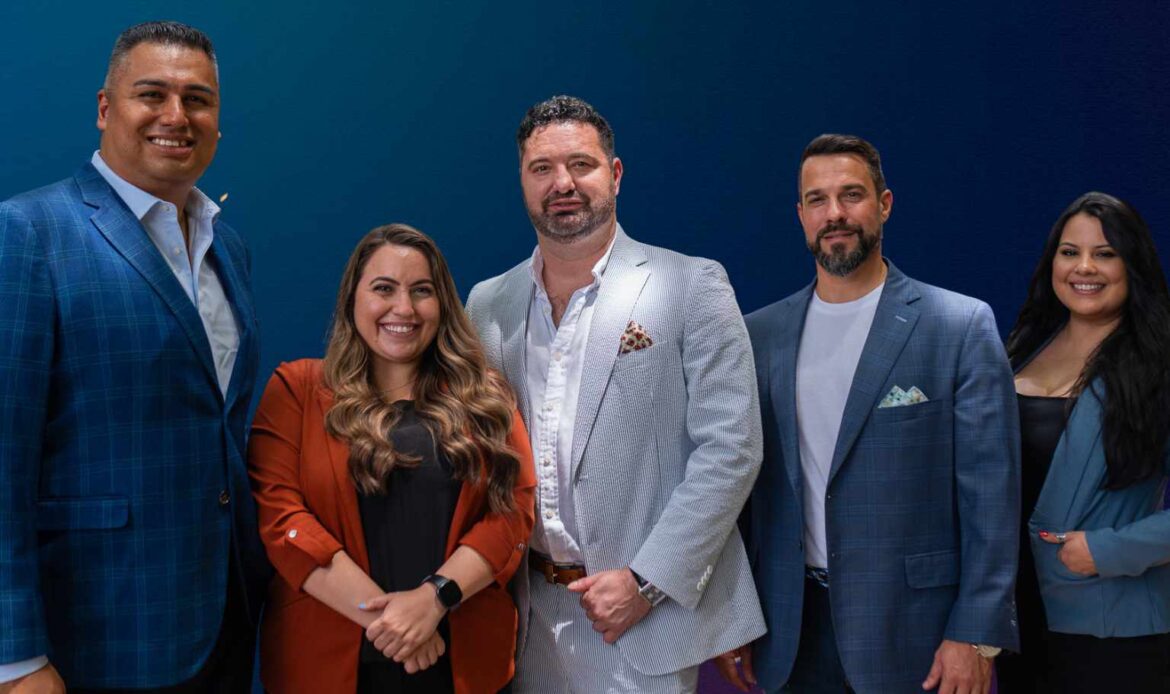
Work injury cases handled as personal injury claims are some of the most complex matters in injury law. They require coordinated handling of two parallel systems and identification of every party that contributed to the injury, whether a third-party contractor, an equipment manufacturer, or the employer in cases where direct liability applies.
Former Prosecutor Experience That Builds Documented Cases
Drew Gibbs spent years as a prosecutor building evidence-based cases against well-resourced opponents in the courtroom. Third-party defendants in work injury cases retain experienced legal teams, challenge causation aggressively, and shift blame to the injured worker and the employer as routine tactics. Drew builds work injury files the same way he built criminal cases: documented evidence, a clear liability theory, and preparation that holds up under pressure.
Military Legal Precision From a JAG Corps Officer
Scott Crivelli served as an active duty Army Judge Advocate General (JAG) Corps officer. A JAG officer is a military attorney who handles complex legal matters for service members under demanding conditions. Work injury cases run for years, involve multiple parties, and require simultaneous management of medical documentation, workers’ comp coordination, and third-party litigation strategy. Scott’s background shapes the structured approach our team applies from day one.
Direct Attorney Involvement on Every Case
At Slingshot Law – Injury Attorneys, the attorneys who take your case handle it from start to finish. You hear from us directly. When decisions need to be made about your claim, the attorney responsible for your file makes them.
Coordinated Workers’ Comp and Personal Injury Strategy
Work injuries pursued as personal injury claims involve two parallel proceedings that affect each other directly. Workers’ compensation carriers retain liens on personal injury recoveries that must be negotiated or resolved before settlement. Failing to coordinate the two tracks can leave significant money on the table. We build the civil claim, whether against a third party or the employer in a direct-liability case, with the workers’ comp picture in view from the first day, and we negotiate liens with the goal of putting more of the recovery in the injured worker’s hands.
Ready to talk through your case? Call (800) 488-7840 for a free consultation.
What Makes Work Injury Claims in Colorado Different?
A work injury claim is rarely just one claim. It is a workers’ compensation case running alongside a potential personal injury case, and the two affect each other in ways that determine what recovery actually looks like.
How Does Workers’ Comp Exclusive Remedy Limit Employer Liability?
Colorado’s Workers’ Compensation Act, C.R.S. Title 8 provides the exclusive remedy for most workplace injuries caused by employer negligence. In exchange for guaranteed benefits regardless of fault, injured workers give up the right to sue their employer in most circumstances.
When Can a Third Party Be Held Liable for a Workplace Injury?
Third-party claims are civil personal injury cases brought against parties other than the employer who contributed to the injury. They are not limited by the exclusive remedy rule and allow recovery of the full scope of personal injury damages.
How Workers’ Comp Liens Affect Personal Injury Recovery
When workers’ comp pays medical costs and disability benefits, the insurance carrier acquires a lien on any personal injury recovery for those same losses. The lien must be addressed before settlement funds reach the injured worker.
Why Workers’ Comp Benefits Rarely Cover the Full Loss
Workers’ comp temporary disability benefits typically pay two-thirds of the average weekly wage, subject to state maximums. Permanent disability benefits are calculated on rating schedules that do not reflect actual long-term wage loss for many workers. Pain and suffering are not available under workers’ comp. Loss of consortium is not available. Punitive damages are not available. For a serious injury that ends a career or permanently limits earning capacity, the difference between workers’ comp benefits and a full damages calculation is often the difference between long-term financial stability and the absence of it.
What Types of Work Injury Cases Do We Handle in Grand Junction?

Work injury claims in Grand Junction and Mesa County arise from a range of industries, and the personal injury analysis differs based on the work environment and the parties involved.
Construction Site Injuries
Construction sites involve general contractors, multiple subcontractors, equipment manufacturers, and property owners working in the same physical space. When a worker employed by one contractor is injured by the negligence of another, the third-party claim runs against the responsible party, while workers’ comp handles the immediate medical and wage benefits. Falls from scaffolding, trench collapses, electrocutions, struck-by injuries, and crane accidents across Grand Junction’s growing construction sector produce some of the most serious work injuries we see.
Oil and Gas Industry Injuries
Western Slope energy operations involve drilling rigs, well sites, pipelines, and transport operations where multiple companies share the worksite. Workers employed by one operator are frequently injured by the negligence of a different contractor, an equipment failure, or hazardous conditions maintained by a third party. The federal Occupational Safety and Health Administration reports that oil and gas extraction workers face a fatality rate several times higher than the all-industry average.
Industrial and Warehouse Injuries
Manufacturing facilities, distribution centers, and industrial operations across Mesa County produce work injuries involving machinery, forklifts, falling inventory, and structural hazards. Equipment manufacturers, maintenance contractors, and property owners can all be third parties in these cases when their negligence contributed to the injury.
Workplace Vehicle and Trucking Crashes
Workers injured in vehicle crashes during the course of employment may pursue workers’ comp benefits and also bring third-party claims against the at-fault driver. Commercial truck drivers, delivery workers, and any employee driving as part of their job duties frequently have both tracks available when a crash injures them.
Falls From Heights and Elevated Surfaces
Falls from roofs, scaffolding, ladders, elevated platforms, and structural steel produce catastrophic injuries on Grand Junction worksites every year. These cases often involve defective fall protection equipment, inadequate safety systems maintained by a different contractor, or property owners who failed to address known fall hazards.
Ready to discuss your case with our Grand Junction work injury team? Call (800) 488-7840 today.
What Compensation Is Available in a Grand Junction Work Injury Claim?
A third-party or direct employer-liability work injury claim allows recovery of the full scope of personal injury damages, beyond the limited categories covered by workers’ compensation.
| Damage Type | What It Covers | How It Is Documented |
|---|---|---|
| Current medical expenses | Emergency care, hospitalization, surgery, immediate rehabilitation | Medical bills, provider records, imaging reports |
| Future medical costs | Ongoing treatment, future surgeries, long-term therapy | Specialist projections, life care plans |
| Full lost wages | Total wage loss during recovery, not the two-thirds rate workers’ comp pays | Pay records, employer statements, tax documentation |
| Lost earning capacity | Lifetime differential between pre-injury and post-injury earning ability | Vocational assessments, economic analysis |
| Pain and suffering | Physical injuries and ongoing daily limitations | Medical records, personal journals, provider testimony |
| Mental anguish | Anxiety, PTSD, and depression following the injury | Psychological evaluations, treatment records |
| Loss of consortium | Loss of companionship and relationship for spouse or dependents | Family testimony, relationship documentation |
| Disability and impairment | Permanent physical limitations affecting daily function | Medical disability ratings, functional capacity evaluations |
| Punitive damages | Willful and wanton conduct by the responsible party | Evidence of egregious conduct, safety violations |
Colorado does not cap compensatory damages in standard personal injury cases. The combination of a personal injury claim, properly documented damages, and coordinated handling of the workers’ comp lien is what separates a recovery that reflects the true cost of the injury from one that doesn’t.
Do I Need a Grand Junction Work Injury Lawyer?
We cannot tell anyone whether they need an attorney for their specific situation. What we can tell you is what a work injury lawyer in Grand Junction does for someone in your position.
What a Work Injury Lawyer Does for You
An attorney investigates the worksite and identifies every party with potential personal injury liability, including third-party contractors, equipment manufacturers, and the employer in cases where exclusive remedy does not apply. They preserve the evidence that establishes negligence and coordinate the personal injury claim with the workers’ comp track to manage the lien. They calculate the full scope of damages, including the lifetime earning capacity loss that workers’ comp does not account for. When the defendant’s insurer refuses to negotiate fairly, they file suit and litigate.
When Do You Need a Lawyer the Most?
- Serious or permanent injuries: Spinal injuries, traumatic brain injuries, amputations, severe burns, and any injury requiring long-term care should be evaluated for a personal injury claim before any settlement is considered
- Multiple parties on the worksite: Construction sites, oil and gas operations, and industrial settings frequently involve more than one company, and identifying personal injury liability requires immediate investigation
- Defective equipment: When a tool, machine, or piece of safety equipment failed and contributed to the injury, the manufacturer may be liable through a product liability claim
- Possible employer-liability exception: When the employer intentionally caused harm, failed to carry workers’ comp insurance, or acted outside the employment relationship, a direct personal injury claim against the employer may be available
- Vehicle crashes during work duties: Any work-related vehicle crash should be evaluated for a personal injury claim against the at-fault driver
A free consultation costs nothing and commits you to nothing. Call (800) 488-7840 to speak with our team today.
FAQ for Grand Junction Work Injury Lawyer
How long do I have to file a work injury claim in Colorado?
A personal injury work claim is subject to Colorado’s two-year statute of limitations under C.R.S. 13-80-102, or three years for motor vehicle-related work injury claims. The workers’ compensation claim runs on a separate timeline, with strict reporting requirements that begin within days of the injury.
Can I sue my employer for a workplace injury?
Usually no, but not always. Colorado’s workers’ compensation system is the exclusive remedy for most workplace injuries caused by employer negligence. The narrow exceptions allow a direct personal injury claim against the employer when the employer intentionally caused the injury, failed to maintain required workers’ comp coverage, or acted outside the employment relationship.
What if my workers’ comp claim has been denied?
A workers’ comp denial requires procedural responses within Colorado’s workers’ compensation system, often involving an appeal through the Colorado Division of Workers’ Compensation. A denial does not bar a separate personal injury claim if another party’s negligence contributed to the injury, or if the employer’s conduct falls within an exception to exclusive remedy.
Can I receive workers’ comp and also pursue a personal injury claim?
Yes. Workers’ compensation and personal injury claims are separate proceedings, and an injured worker can pursue both at the same time. The workers’ comp carrier will assert a lien on any personal injury recovery for the medical costs and disability benefits it paid, and that lien must be addressed in the settlement structure.
Workers’ Comp Was Never Built to Make You Whole
Slingshot Law – Injury Attorneys fights for Grand Junction work injury victims by building the personal injury claim that runs alongside the workers’ comp system, whether against a third party or the employer in cases where direct liability applies. We identify every party whose negligence contributed to the injury, document the full lifetime cost, and pursue the recovery that workers’ comp alone was never going to provide.
There is no upfront cost and no fee unless we recover compensation on your behalf. Contact the injury attorneys at Slingshot Law – Injury Attorneys or reach out online to talk with our Grand Junction team. Call us at (800) 488-7840.
Grand Junction Office
Address: 734 Main Street, Grand Junction, CO 81501
Phone: (800) 488-7840