


Does Texas have a motorcycle helmet law?Yes. Texas motorcycle helmet law requires all riders and passengers under age 21 to wear a DOT-compliant helmet on any motorcycle. Riders 21 and older may ride without a helmet only if they have completed an approved motorcycle safety course or carry qualifying medical insurance covering motorcycle injuries.
Texas does have a motorcycle helmet law, but it is a partial requirement rather than a universal mandate. Texas motorcycle helmet law under Transportation Code § 661.003 requires all riders and passengers under age 21 to wear DOT-compliant protective headgear on any motorcycle operating on a public street or highway.
Riders 21 and older may ride without a helmet only if they completed an approved motorcycle operator training and safety course or carry qualifying health insurance covering motorcycle collision injuries.
The partial nature of the law creates practical questions for riders. Which helmets meet the standard? What counts as a qualifying safety course or insurance policy? What happens after a crash when a rider was legally exempt from the helmet requirement, and what happens when the rider was not? The answers matter because helmet status often becomes a contested issue in motorcycle injury claims, regardless of whether the rider was legally required to wear one.
The law itself is short and specific, but insurers and defense attorneys often frame helmet questions in ways that create confusion. What follows covers the actual legal requirements, the penalties for violation, and how helmet status affects a Texas motorcycle accident case.
Texas Motorcycle Helmet Law Factoids
- Texas has a partial helmet law that applies to riders and passengers under 21. Under-21 riders and passengers must wear DOT-compliant helmets on any motorcycle at all times.
- Riders 21 and older may qualify for an exemption. The exemption requires completion of a Chapter 662 motorcycle safety course or coverage under a qualifying health insurance plan.
- The fine for violating the helmet law is small, but the case implications are significant. Statutory fines range from $10 to $50, though court costs typically raise the actual out-of-pocket amount.
- Peace officers may not stop riders solely to check helmet exemption status. Helmet enforcement in Texas works as a secondary enforcement matter.
- Not wearing a helmet does not bar recovery in a Texas motorcycle accident case. Insurers often use helmet status to argue against injury severity, but it does not affect fault for the crash itself.
What Does the Texas Motorcycle Helmet Law Actually Require?
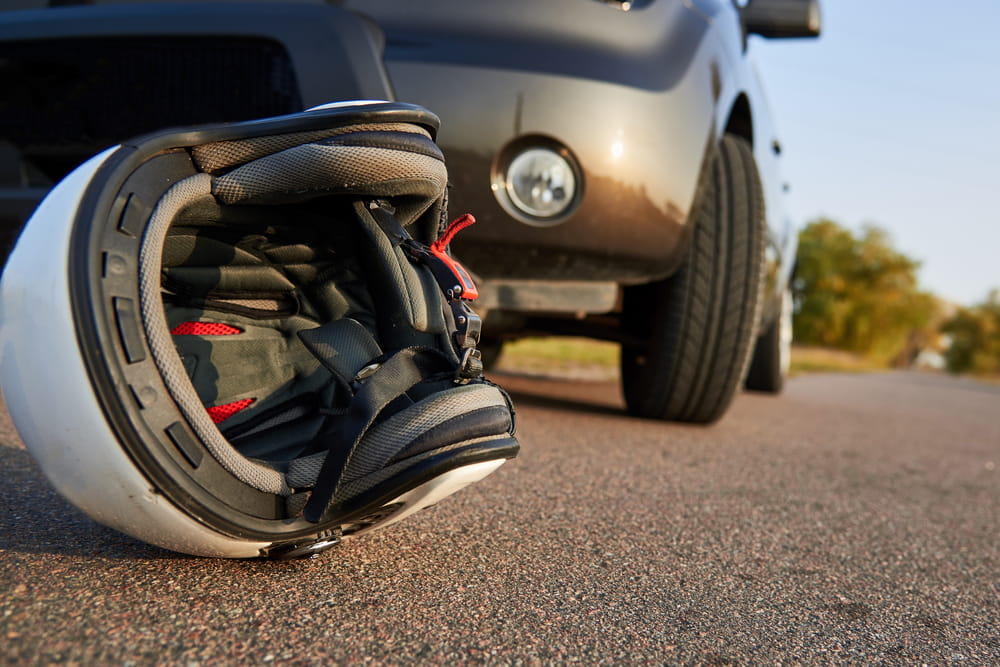
The Texas motorcycle helmet law requires anyone operating or riding as a passenger on a motorcycle on public roads to wear protective headgear meeting Department of Public Safety standards, with an exception for adults over 21 who have completed an approved safety course or carry qualifying medical insurance.
Who Must Wear a Helmet Under Texas Law?
Every rider and passenger under age 21 must wear a DOT-compliant helmet on any motorcycle at all times, without exception. Riders 21 and older must also wear a helmet unless they qualify for the statutory exception. The requirement applies to both the operator and any passenger, so a 25-year-old rider who qualifies for exemption may still face a citation if their passenger is under 21 and unhelmeted.
What Counts as a DOT-Compliant Helmet?
A qualifying helmet must meet Federal Motor Vehicle Safety Standard 218, established by the National Highway Traffic Safety Administration. DOT-compliant helmets carry a DOT certification label affixed by the manufacturer. Novelty helmets, half-shell helmets without DOT certification, and imported helmets without proper labeling do not meet the standard, even if the rider wears them consistently. Insurance disputes often turn on whether the helmet actually met the DOT standard rather than simply whether one was worn.
When May a Rider 21 or Older Ride Without a Helmet?
A rider 21 or older qualifies for the helmet exemption only if one of two conditions applies. Either the rider successfully completed a motorcycle operator training and safety course approved under Texas Transportation Code Chapter 662, or the rider carries a health insurance plan providing medical benefits for injuries incurred in a motorcycle collision. The burden of proof falls on the rider to demonstrate the exemption if asked. Texas Department of Insurance issues a standard proof-of-coverage document that qualifying insurance holders may present.
What Are the Penalties for Violating Texas Helmet Law?
Violating the Texas helmet law is a Class C misdemeanor punishable by a fine of not less than $10 and not more than $50 under Transportation Code § 661.003(h). Court costs and administrative fees typically increase the actual amount owed. The statute treats operating without a required helmet and carrying an unhelmeted passenger as separate offenses, so a violation involving both operator and passenger may generate two tickets.
Do Officers Stop Riders Just to Check for Helmet Compliance?
Peace officers may not stop or detain a motorcyclist solely to determine whether the rider is exempt from the helmet requirement under Texas Transportation Code § 661.003(c-1). This rule makes helmet enforcement a secondary matter. Officers may cite a rider for helmet violations only after making a lawful stop for another reason, such as a traffic violation or a moving offense.
How Does the Texas Motorcycle Helmet Law Affect a Motorcycle Accident Claim?
The Texas motorcycle helmet law affects injury claims primarily through arguments over injury severity rather than fault for the crash itself. Not wearing a helmet does not automatically reduce a claim or bar recovery, but insurers frequently use helmet status to challenge the value of head and brain injuries.
| Scenario | Legal Effect on Injury Claim |
|---|---|
| Under 21, no helmet (illegal) | Recovery not barred; possible comparative fault argument for injury severity |
| 21+, exempt, no helmet (legal) | Recovery not affected by helmet status alone |
| 21+, not exempt, no helmet (illegal) | Recovery not barred; injury severity argument likely |
| Helmet worn but dislodged in crash | Fact-specific; usually treated as helmeted rider |
Does Riding Without a Helmet Prevent Recovery in Texas?
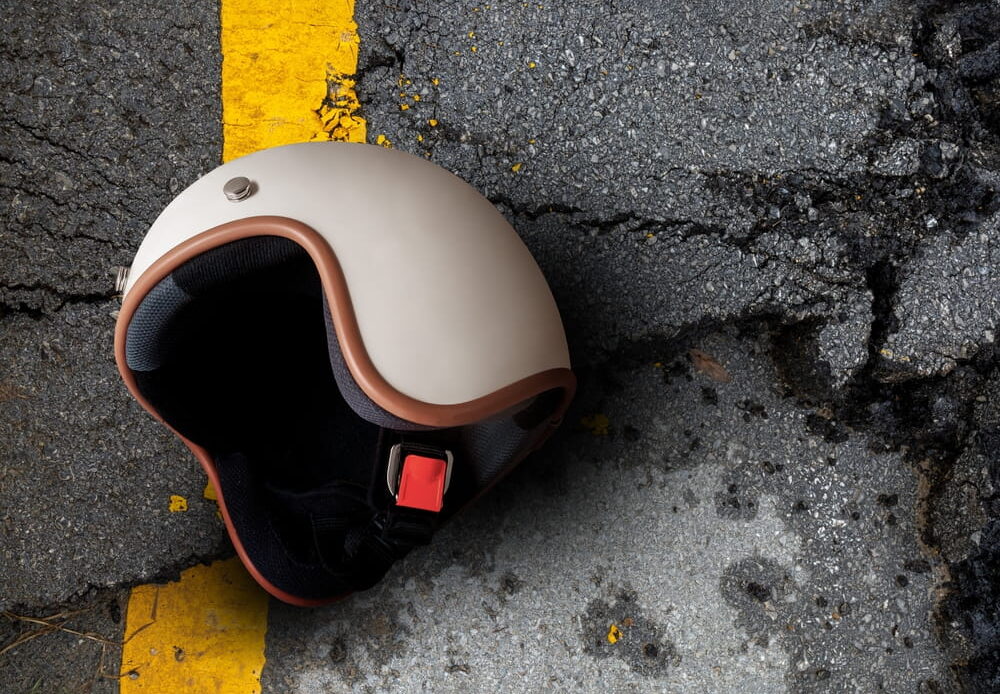
Riding without a helmet does not bar recovery in a Texas motorcycle accident case, even if the rider was legally required to wear one. Texas follows a proportionate responsibility framework in which fault for the crash is separate from choices about protective gear. A rider hit by a driver who ran a red light may still recover full damages for the crash itself.
What non-helmet use may affect is the argument over the severity of specific injuries, particularly head and brain injuries.
How Insurers Use Helmet Status Against Injured Riders
Insurance adjusters routinely raise helmet questions early in a motorcycle case, often within the first phone call. Adjusters may argue that a helmet would have prevented or reduced brain trauma, facial injuries, or fatal head injuries, and use that argument to lower the settlement offer. Countering these arguments requires medical evidence connecting specific injuries to the crash forces, not just to helmet non-use.
According to TxDOT data, approximately 37% of Texas motorcyclists killed in 2024 crashes were not wearing helmets, and defense strategies in these cases often lean heavily on that pattern.
Texas Motorcycle Helmet Law Questions Answered by Our Austin Attorneys
Do passengers have to wear helmets in Texas?
Passengers under 21 must wear DOT-compliant helmets at all times without exception. Passengers 21 and older follow the same exemption rules as operators: they may ride helmet-free only if they completed an approved safety course or carry qualifying medical insurance.
An operator may face a citation for carrying an unhelmeted passenger even if the operator is properly helmeted.
Does the Texas helmet law apply to mopeds and motor scooters?
The helmet law under Transportation Code § 661.003 applies specifically to motorcycles. Mopeds and motor scooters fall under separate provisions in Texas Transportation Code Chapter 661, with different age and helmet requirements based on engine size and vehicle classification.
Riders on smaller-displacement vehicles should verify the specific requirements for their class of vehicle.
What if I am from another state and rode into Texas without a helmet?
Texas helmet law applies to any motorcycle operating on Texas public streets or highways, regardless of the rider’s home state. Out-of-state riders under 21 must wear helmets in Texas. Out-of-state riders 21 and older who lack proof of an approved safety course or qualifying insurance are subject to the same requirement. Home-state helmet exemptions do not carry over.
If I was legally riding without a helmet and was hit, does that hurt my case?
Legally riding without a helmet does not directly reduce a Texas motorcycle injury claim. Insurers may still raise helmet arguments to challenge specific head or brain injury damages, but the exempt legal status neutralizes some of that argument. Case value on head injury damages usually depends on medical evidence and expert opinion connecting the specific injuries to the crash forces.
The Law Answers One Question. The Case Answers Others.

Whether Texas has a helmet law is a settled question, and the exact requirements fit within a single statute. What a helmet decision means for a specific rider hurt in a specific crash is a much more open question, and one that helmet law alone does not answer. What role will helmet status play in your case?
If you or a family member was injured in an Austin motorcycle crash and you have questions about how helmet status affects the claim, Slingshot Law Injury Attorneys handles motorcycle cases across Central Texas. Contact the injury attorneys at Slingshot Law to talk through the specific facts of your claim. Call (800) 488-7840 for a free case review.