

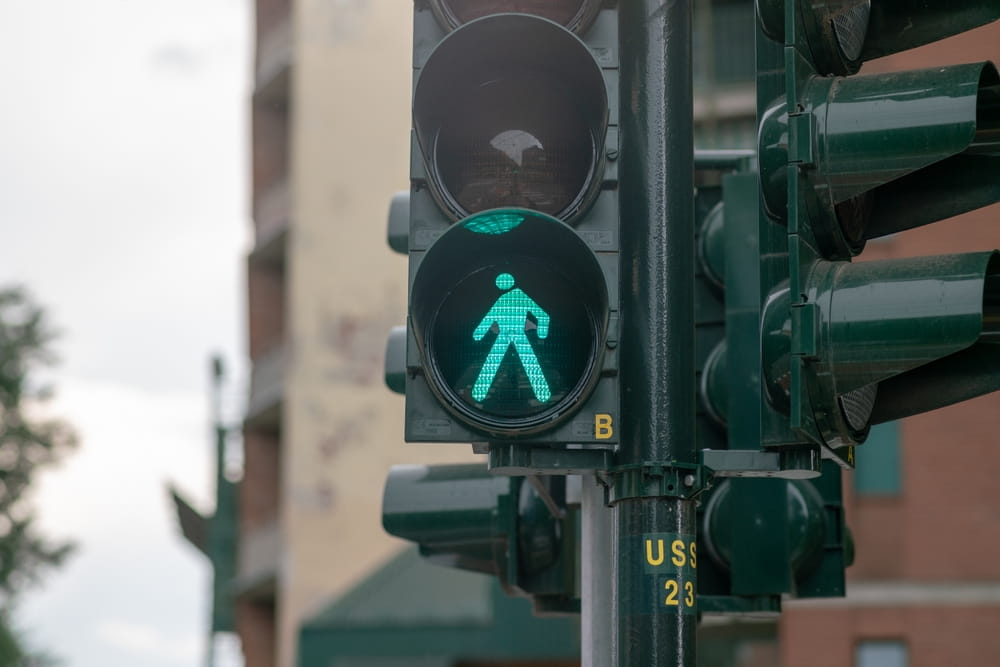
Pedestrian accident fault in Texas does not automatically bar a victim from recovering compensation. Under Texas’s modified comparative negligence rule, an injured pedestrian who bears some responsibility for a crash can still pursue a claim as long as their share of fault does not exceed 50 percent.
A pedestrian accident lawyer evaluates how fault is actually allocated in these cases, because insurers routinely assign pedestrians far more blame than the facts support in order to reduce what they pay.
That reality shuts down more valid claims than any other single factor. A pedestrian who was crossing mid-block, had the wrong signal, or stepped off the curb without looking, assumes their own fault, making them ineligible.
That assumption is wrong, and it costs injured people real money. Texas law was specifically designed to allow partial-fault victims to recover, and the specific percentage of fault assigned matters enormously to the outcome.
Understanding how comparative fault pedestrian accident cases work in Texas, how insurers manipulate fault percentages, and what evidence changes those numbers gives injured pedestrians a far clearer picture of what their claim may actually be worth.
Pedestrian Accident Fault in Texas
- Texas follows a modified comparative negligence rule that allows pedestrian accident victims to recover compensation as long as their assigned fault does not exceed 50 percent
- Comparative fault in a pedestrian accident in Texas reduces recovery proportionally, meaning a victim found 30 percent at fault recovers 70 percent of their total damages
- Jaywalking accident compensation in Texas is not automatically eliminated by the pedestrian’s location at the time of the crash, and the driver’s speed, distraction, or impairment may still represent the majority of fault
- Insurance companies routinely inflate a pedestrian’s share of fault as a standard tactic to reduce settlement offers, and that assigned percentage is negotiable with the right evidence
- A pedestrian partially at fault in Texas who accepts an early settlement without understanding comparative fault may recover significantly less than what the law allows
What Texas’s Modified Comparative Negligence Rule Actually Says
Texas follows the modified comparative negligence framework under Texas Civil Practice and Remedies Code Chapter 33. The rule allows an injured party to recover damages even when they share fault for an accident, with one critical threshold: if a court finds the plaintiff more than 50 percent responsible, recovery is barred entirely.
Below that threshold, recovery is reduced by the plaintiff’s percentage of fault. A pedestrian whose total damages are $200,000 but who is found 25 percent at fault recovers $150,000. At 40 percent fault, they recover $120,000. At 51 percent, they recover nothing.
The 51 Percent Bar and Why It Matters
The 51 percent bar is the line that separates a recoverable claim from a barred one. It’s also the line insurers try to push victims across when the facts of a crash are unfavorable to their insured driver. Understanding where that line sits, and how far the actual facts are from it, is what allows an attorney to counter inflated fault assignments with documented evidence.
How Fault Is Allocated Between Drivers and Pedestrians in Texas

Fault allocation in a Texas pedestrian accident case requires evaluating every party’s conduct leading up to the crash. Factors that typically weigh against the driver include:
- Speed above the posted limit: A driver exceeding the speed limit had reduced stopping distance and reaction time regardless of the pedestrian’s location
- Distracted driving: A driver on a phone, adjusting a radio, or otherwise inattentive bears direct fault for failing to observe a pedestrian who was visible
- Impaired driving: A driver whose impairment contributed to delayed reaction or poor judgment carries significant fault independent of what the pedestrian was doing
- Failure to yield at crosswalks: Texas law requires drivers to yield to pedestrians in marked crosswalks, and failure to do so is a statutory violation
- Visibility conditions: A driver who struck a pedestrian in low-light conditions without adjusting speed or attention may bear the majority of fault even if the pedestrian’s visibility was limited
The pedestrian’s share of fault is evaluated separately, and those two assessments don’t cancel each other out. They produce the final allocation that determines what recovery looks like.
Can I Get Money If I Was Jaywalking When I Got Hit by a Car in Austin?
Jaywalking accident compensation in Texas is available to pedestrians who were crossing outside a marked crosswalk, provided their overall share of fault doesn’t exceed 50 percent. Being outside a designated crossing is a factor in fault allocation, but it is one factor among many, and it frequently does not represent the majority of fault in crashes where a driver was speeding, distracted, or impaired.
Consider a pedestrian crossing mid-block on South Congress Avenue in Austin at night. They were outside a crosswalk. A driver traveling 40 miles per hour in a 30-mile-per-hour zone, looking at a phone, struck them.
The pedestrian’s crossing location contributed to the crash. But the driver’s speed violation and distraction are independent failures that likely represent the larger share of fault in that scenario.
How Fault Percentages Play Out in Jaywalking Cases
The specific numbers matter. A fault distribution of 35 percent pedestrian and 65 percent driver produces a recovery of 65 percent of total damages. At serious injury levels, the difference between recovering 65 percent and recovering nothing is the difference between financial stability and years of uncovered medical debt.
Insurers know this arithmetic. Their standard approach to jaywalking cases is to inflate the pedestrian’s fault percentage to 51% or higher, thereby eliminating the claim entirely. Pushing back on that assignment requires evidence: traffic camera footage showing the driver’s speed, phone records establishing distraction, accident reconstruction analysis, and eyewitness accounts.
How Insurers Inflate Pedestrian Fault in Texas Accident Claims
Insurance adjusters assign fault percentages, and those initial assignments are not objective determinations. They are opening positions in a negotiation, and they are calculated to reduce what the insurer pays. In pedestrian accident fault cases in Texas, that often means assigning the pedestrian a share of fault that exceeds what the actual evidence supports.
Common Tactics Insurers Use to Inflate Pedestrian Fault
- Relying solely on the police report: Police reports document what responding officers observed and what parties reported, but they are not fault determinations. An insurer that uses only the report without independent investigation controls the narrative
- Ignoring driver conduct: Adjusters sometimes evaluate only whether the pedestrian was in a crosswalk, whether they had the walk signal, and whether they were using a phone, while giving minimal weight to the driver’s speed, sobriety, and attentiveness
- Using the pedestrian’s recorded statement: Early recorded statements from pedestrians who don’t understand comparative fault often include admissions about where they were crossing or what they were doing that adjusters use to justify inflated fault assignments
- Offering settlements before fault is fully investigated: A fast settlement offer made before accident reconstruction or camera footage is reviewed locks in a fault percentage based on incomplete information
Each of these tactics produces a lower payout than the evidence would support if fully developed. Challenging them requires building a complete factual record before any settlement discussion takes place.
A Pedestrian Partially at Fault in Texas: What the Evidence Changes
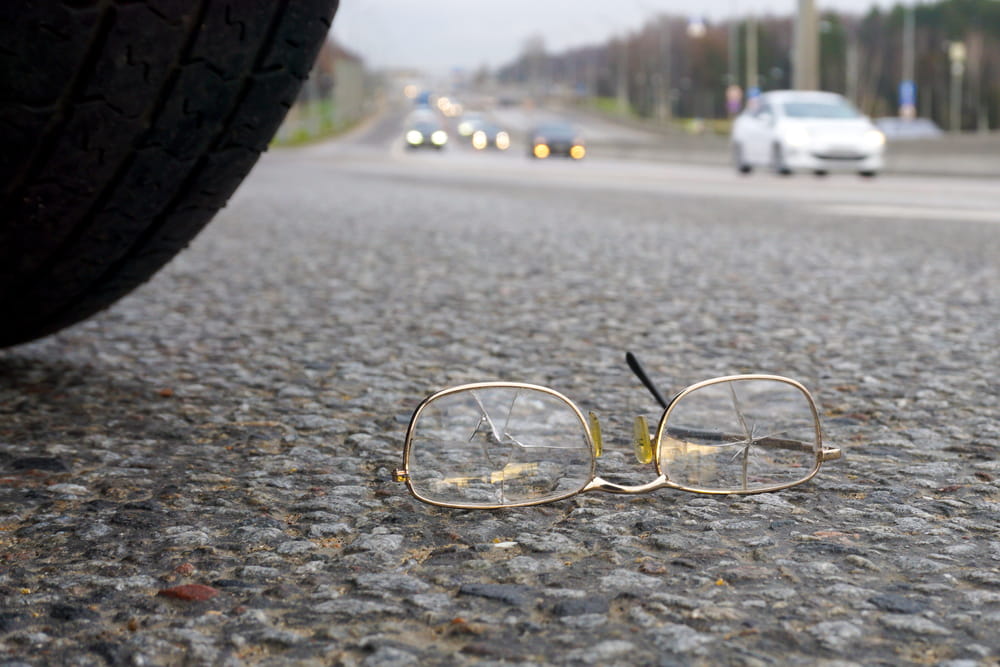
The fault percentage assigned to a pedestrian partially at fault in Texas is not fixed. It responds to evidence, and the evidence that shifts fault away from the pedestrian is often available but not automatically gathered.
Evidence That Reduces a Pedestrian’s Assigned Fault
- Traffic and surveillance camera footage: Cameras at intersections and on nearby businesses often capture vehicle speed, driver behavior, and the sequence of events leading to the crash in ways that a police report cannot
- Phone records and telematics data: A driver’s phone records establish whether they were using a device at the time of impact. Telematics data from the vehicle may show speed and braking patterns in the seconds before the crash
- Accident reconstruction analysis: A qualified reconstructionist can calculate vehicle speed from skid marks, point of impact, and vehicle damage in ways that contradict an insurer’s fault assignment
- Eyewitness accounts: Bystanders who observed the crash often have a clearer view of driver conduct than the parties themselves and may provide accounts that directly contradict an insurer’s version of events
- Prior incident data at the crash location: A history of pedestrian crashes at the same location, particularly those involving driver conduct issues, supports arguments about road conditions and driver behavior patterns
Building that evidentiary record before engaging with the insurer is what positions a pedestrian partially at fault in Texas to challenge an inflated assignment rather than accept it.
FAQ for Comparative Fault Pedestrian Accident Texas
How long do I have to file a pedestrian accident claim in Texas if I was partly at fault?
Texas sets a two-year statute of limitations for personal injury claims under Texas Civil Practice and Remedies Code Section 16.003. Shared fault does not shorten that deadline, but the evidence needed to counter an inflated fault assignment, including camera footage and phone records, disappears long before the two-year window closes. Early action protects both the legal deadline and the evidentiary foundation.
Does being on my phone when I was hit affect my pedestrian accident claim in Texas?
Phone use by the pedestrian at the time of a crash is a factor that insurers frequently use to assign fault. Whether it represents a significant share of overall fault depends on what the driver was doing simultaneously. A driver who was also distracted, speeding, or impaired cannot deflect the entirety of fault onto a pedestrian who was on a phone. Both parties’ conduct is evaluated, and the driver’s violations are independently weighted.
Can I recover if I crossed against a red light and was hit by a car in Austin?
Crossing against a signal is a factor in fault allocation, not an automatic bar to recovery. If the driver was speeding, ran a separate signal, or was otherwise negligent, those failures contribute to the fault analysis independently. A pedestrian who crossed against a red light but bears 40 percent of the total fault can still recover 60 percent of their damages under Texas’s comparative negligence framework.
What if the insurance company says I was more than 50 percent at fault?
An insurer’s initial fault assignment is a negotiating position, not a legal determination. It can be challenged with evidence: camera footage, accident reconstruction, phone records, and eyewitness accounts. If the case proceeds to litigation, a jury makes the final fault determination based on all available evidence. Accepting an insurer’s 51 percent assignment without legal guidance may mean walking away from a recoverable claim.
Does comparative fault apply differently in wrongful death pedestrian cases in Texas?
Texas’s proportionate responsibility framework applies to wrongful death claims as well as personal injury claims. When a pedestrian was killed and the surviving family pursues a wrongful death claim, the deceased’s share of fault reduces recovery in the same proportional way. The 51 percent bar applies, and the same evidentiary tools are used to contest inflated fault assignments in wrongful death cases as in standard injury claims.
The Fault Percentage the Insurer Gives You Is Not the Final Word

Pedestrian accident fault in Texas is not determined by a single phone call from an adjuster. It is a legal question that responds to evidence, and the evidence that reduces a pedestrian’s assigned fault is rarely gathered automatically. It requires investigation, preservation, and the kind of legal preparation that takes place before any settlement conversation happens. Most pedestrians who walk away from claims after being told they were at fault do so because no one showed them what the full evidence picture looked like. Some of those claims were recoverable. Contact the injury attorneys at Slingshot Law to talk through the specific facts of your pedestrian accident and what comparative fault looks like in your case.