


Workers injured in a construction site fall accident in Austin have the right to pursue compensation through a personal injury lawsuit, a workers’ compensation claim, or both, depending on who was responsible and how the fall happened.
A construction accident lawyer examines the site conditions, the parties who controlled them, and whether federal safety violations contributed to the accident, because falls on construction sites are rarely just bad luck.
That framing matters.
Falls are the leading cause of death in the construction industry in the United States, and they’re heavily concentrated on exactly the kind of high-rise and infrastructure projects reshaping Austin’s skyline.
When a worker falls from scaffolding, a roof, or a ladder, the question isn’t just what happened. It’s who failed to prevent it.
Understanding how OSHA standards apply to construction fall accidents, how those violations translate into legal liability in Texas, and what claims are available to injured workers gives a clearer picture of what accountability actually looks like after a fall.
Quick Facts
- Falls are the number one cause of construction fatalities nationally, and Austin’s active high-rise and infrastructure development creates concentrated exposure across the city
- OSHA requires specific fall protection measures for work at heights of six feet or more on construction sites, and violations of those standards may establish negligence per se in a Texas civil claim
- A scaffolding fall injury in Texas may support claims against the general contractor, the scaffolding company, a subcontractor, and in some cases the equipment manufacturer
- A ladder fall injury claim in Texas depends on documenting the condition of the ladder, the training provided, and who was responsible for maintaining that equipment
- Third-party claims against general contractors, property owners, and equipment suppliers often produce a fuller recovery than workers’ comp alone
How OSHA Violations Establish Negligence in a Texas Fall Injury Claim
Texas courts recognize the doctrine of negligence per se, which holds that violating a statute or regulation designed to protect a specific class of people from a specific type of harm establishes the negligence element of a civil claim automatically.
An injured construction worker doesn’t need to argue that the contractor’s conduct was unreasonable. The OSHA violation itself makes that argument. OSHA’s fall protection standards exist specifically to prevent construction workers from falling. A worker who falls from unguarded scaffolding on an Austin jobsite where guardrails were required but absent has a strong negligence per se foundation.
The same applies to a ladder fall injury claim in Texas where the ladder was damaged, improperly positioned, or missing the required non-slip feet.
How OSHA Investigation Records Strengthen a Civil Case
When a serious fall occurs on a Texas construction site, OSHA typically opens an investigation. That investigation produces citations, inspection reports, and findings that document exactly which standards were violated, which employer was cited, and what conditions were observed. Those records are public, and they become powerful evidence in civil litigation.
We request OSHA investigation records immediately following a construction site fall, because the agency’s independent findings often corroborate exactly what the injured worker experienced. When a federal agency reaches the same conclusion about a safety failure that a civil lawsuit alleges, it changes the dynamic of how insurers and defendants respond.
Why Falls Dominate Austin Construction Accident Cases
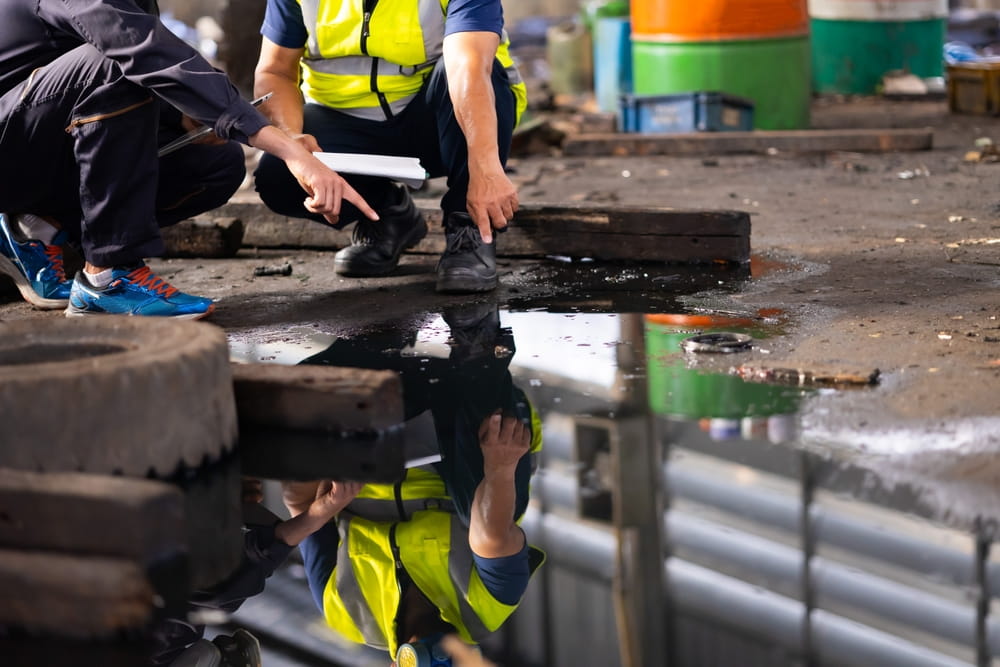
Austin’s construction boom has produced one of the most active development markets in the country. Downtown high-rises, mixed-use developments along the East Riverside corridor, and major infrastructure work on I-35 and MoPac all share a common feature: workers at elevation, often on scaffolding systems and elevated platforms that require precise safety management.
According to OSHA, falls consistently account for the largest share of construction fatalities in the United States, representing roughly one-third of all construction deaths each year. The human cost of that statistic is concentrated on the workers doing the most physically exposed work on the most demanding projects.
What the number also reflects is a consistent pattern of preventable failures. Guardrails not installed. Fall arrest systems not provided. Ladders not secured. Scaffolding erected without following manufacturer specifications. These are not freak accidents. They are the predictable result of someone choosing not to comply with federal safety standards.
The OSHA Framework for Fall Protection on Texas Construction Sites
OSHA’s fall protection standards for construction require employers to provide fall protection for workers at heights of six feet or more. Those standards specify what protection is required based on the type of work, the surface, and the equipment involved.
The required protections include guardrail systems, safety net systems, and personal fall arrest systems such as harnesses connected to anchor points. OSHA also imposes specific requirements for scaffolding assembly, inspection, and load capacity, as well as ladder safety standards covering angle, condition, and securing.
When a construction site fall accident in Austin involves an employer or contractor who failed to meet these requirements, the OSHA violation becomes a central piece of the civil case.
Scaffolding Fall Injuries in Texas: Who Bears Liability
A scaffolding fall injury in Texas raises liability questions that extend well beyond the injured worker’s direct employer. Multiple parties typically share responsibility for the condition and use of scaffolding on a commercial construction site.
- The general contractor: General contractors who control the worksite and approve the use of scaffolding systems bear responsibility for ensuring those systems comply with OSHA standards, even when a subcontractor erected them
- The subcontractor who erected the scaffold: The crew responsible for assembly is directly accountable for whether guardrails were installed, planking was secured, and load ratings were respected
- The scaffolding rental company: When scaffolding is rented rather than owned, the company that supplied it may face product liability or negligent maintenance claims if the equipment itself was defective or improperly configured
- The property owner: Owners who retain control over site access and safety oversight may bear premises liability for conditions they approved or failed to correct
Identifying every party in the scaffolding liability chain is what separates a claim that recovers against one insurer from one that pursues every available source of compensation. Our attorneys investigate the full ownership and operational structure of every scaffolding system involved in a fall.
Ladder Fall Injury Claims in Texas: Building the Case
Ladder accidents are among the most common construction fall injuries, and they’re also among the most frequently misclassified as worker error. OSHA’s ladder safety standards are specific and detailed, covering everything from the angle at which a ladder must be placed to the inspection requirements before each use.
A ladder fall injury claim in Texas focuses on who owned the ladder, who was responsible for maintaining it, whether the injured worker received proper training, and whether the ladder was appropriate for the task it was being used for. A worker sent up a damaged extension ladder to reach a height that required a different piece of equipment was placed in that position by someone else’s decision.
Documenting a Ladder Fall Injury on an Austin Worksite
The ladder involved in a fall is evidence. Its condition, the angle at which it was set, whether it was tied off, and what the surface beneath it looked like at the time of the fall all matter to the civil case. Construction sites change fast, and the ladder may be moved, repaired, or discarded before any formal investigation begins.
We move immediately to document and preserve physical evidence, request maintenance and inspection logs, and identify who approved the use of that equipment. Those steps happen in the days following the injury, not weeks later.
What Compensation Is Available After a Construction Fall in Texas
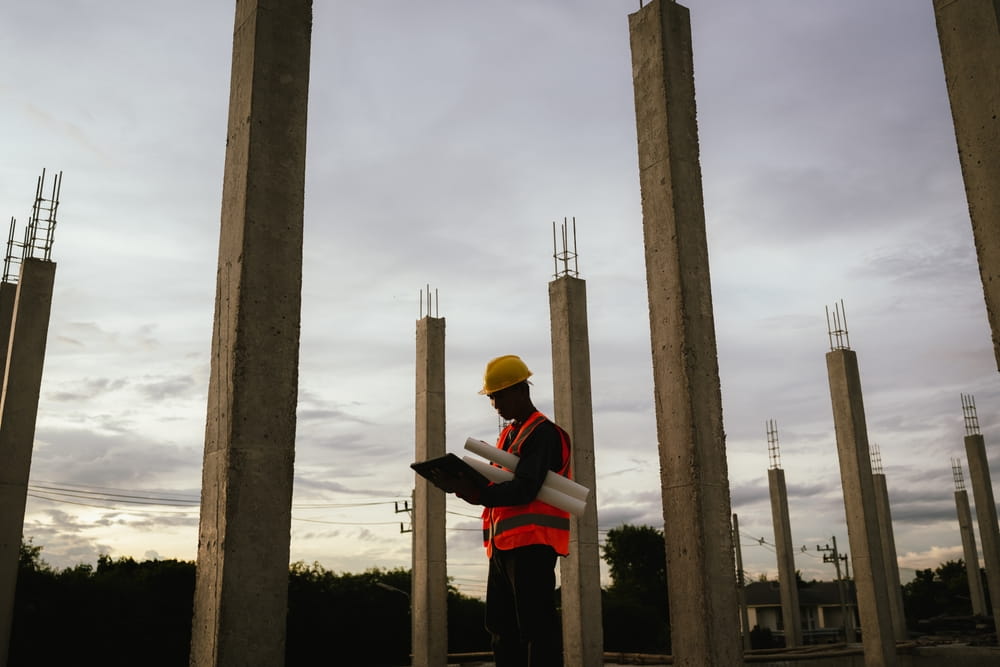
Construction site fall accidents frequently produce some of the most serious injuries in personal injury litigation: traumatic brain injuries, spinal damage, multiple fractures, and in the worst cases, fatal outcomes. The damages available reflect that severity.
Economic damages in a Texas construction fall injury claim cover medical expenses including emergency care, surgery, rehabilitation and long-term treatment, and lost income during recovery and beyond. When a fall results in permanent disability or limits a worker’s ability to return to construction or any comparable work, future lost earning capacity becomes a significant component of the claim.
Non-economic damages cover the human cost: pain and suffering, mental anguish, and the loss of activities and relationships that serious physical injuries take away. These damages don’t appear on a medical bill, but they represent real losses that Texas civil law recognizes.
When a contractor’s conduct reflects gross negligence, a deliberate decision to ignore known OSHA requirements on a project where falls were foreseeable, exemplary damages may be available under Texas law. A general contractor with prior OSHA citations for fall protection violations on the same project presents exactly that kind of fact pattern.
FAQ
Can I get compensation for falling off scaffolding at a construction site in Austin?
Compensation for a scaffolding fall in Austin may be available through a personal injury lawsuit against the general contractor, the subcontractor who erected the scaffolding, or the company that supplied the equipment, depending on where the safety failure occurred.
Whether your employer subscribes to Texas workers’ compensation affects which claims apply to your employer directly, but it does not eliminate third-party claims against other responsible parties. An attorney reviews the full liability picture before any claim is filed.
How do OSHA violations affect my Texas construction fall lawsuit?
An OSHA violation that contributed to a fall may establish negligence per se in a Texas civil claim, meaning the violation itself satisfies the negligence element without requiring additional argument about whether the conduct was unreasonable.
OSHA investigation records, citations, and inspection findings are evidence in civil litigation and often strengthen the case significantly. We request those records as part of our early investigation on every fall accident case.
What if my employer says the fall was my fault?
Fault allocation in a Texas construction fall case is determined by the facts, not by what an employer claims. When a worker falls because guardrails weren’t installed, a ladder was defective, or safety equipment wasn’t provided, the employer’s assertion that the worker caused the accident has to hold up against the physical evidence, OSHA records, and witness accounts. If your employer is a workers’ comp non-subscriber, they cannot even raise contributory negligence as a defense.
Does it matter which company owned the scaffolding or ladder involved in my fall?
Yes. Equipment ownership and maintenance responsibility directly affect which parties face liability in a construction fall case. A scaffolding rental company that supplied defective equipment, a general contractor who approved its use without inspection, and a subcontractor who assembled it incorrectly may all bear independent responsibility. Tracing the equipment chain is a standard part of our investigation in fall accident cases.
How long do I have to file a lawsuit after a construction fall in Texas?
Texas sets a two-year statute of limitations for personal injury claims under Texas Civil Practice and Remedies Code Section 16.003. That clock starts on the date of the accident. Evidence preservation, OSHA record requests, and identifying all responsible parties take time, and waiting diminishes what’s available. Speaking with an attorney well before that deadline is the most protective step an injured worker can take.
When a Fall Is More Than a Workplace Accident

A construction site fall accident in Austin is not simply an occupational hazard. It is, in many cases, the direct result of a contractor’s decision not to install guardrails, provide harnesses, maintain equipment, or follow federal safety standards that exist for exactly this reason. What would it mean for your recovery to know that the fall that changed your life was the result of a safety failure someone else was responsible for preventing? Contact the injury attorneys at Slingshot Law to talk through the details of your case.