

The morning after an Austin car accident, someone from the other driver’s insurance company calls. They ask about your day, suggest a recorded statement, and start filling in a claim file. That file (not what happened at the scene) becomes what determines the final settlement offer. Reshaping the file before the adjuster fixes the number is the core work of an Austin car accident lawyer.
Slingshot Law Injury Attorneys represents drivers and passengers hurt in Austin car crashes: rear-end collisions on I-35 and MoPac, intersection wrecks, hit-and-runs, drunk driving crashes, and cases involving uninsured or underinsured drivers. Every case starts with the same question: what does the file look like now, and what does it need to look like to reflect the actual value of the case?
The work runs on three tracks that move in parallel. Documenting the crash means securing the police report, witness statements, dashcam or surveillance video, and scene photographs before they disappear. Documenting the injury means aligning medical treatment with the crash timeline, tracking continuity of care, and preserving records of every appointment, prescription, and referral.
Managing the insurance file means intercepting adjuster contact, controlling the flow of information into the claim, and preparing every document with the eventual demand or lawsuit in mind.
Call (800) 488-7840 for a free case review. Our Austin office sits at 1802 Lavaca Street, and our attorneys handle car accident cases across Central Texas. Slingshot Law holds a 4.9-star rating across 158 client reviews.
How Do Insurers Actually Value an Austin Car Accident Claim?
Insurers value Austin car accident claims primarily through settlement software that scores each claim on medical bills, injury codes, treatment patterns, and property damage. The software generates a settlement range that adjusters treat as the baseline.
Adjusters rarely deviate significantly from what the software produces, which means the claim file’s inputs (not what actually happened at the scene) largely determine the offer.
How Medical Treatment Patterns Shape Settlement Value
Consistent, continuous, and well-documented medical treatment produces higher settlement values than sporadic care. Gaps between appointments, missed physical therapy sessions, and unexplained delays between the crash and the first medical visit all give adjusters a reason to reduce the claim. Building the medical record correctly is as important as the injuries themselves.
Why Property Damage Shapes Injury Value More Than It Should
Adjusters and settlement software weigh property damage heavily. A crash that produces $8,000 in vehicle damage often generates a higher soft-tissue injury valuation than a crash with $2,000 in vehicle damage, even when the actual injuries are identical. Insurers use this correlation to justify lowball offers on “minor impact” cases.
Counter-evidence (accident reconstruction, biomechanical analysis, or medical opinions tying injury severity to specific crash forces) may substantially change the valuation.
What Adjusters Do When the File Looks Trial-Ready
Adjusters evaluate not just the claim itself but the likelihood the case ends up in court. When the file shows organized medical records, preserved evidence, and an attorney with a trial history on similar cases, settlement authority increases. Files that look like easy settlements draw the lowest numbers. Files that look prepared for a jury draw the highest.
What Types of Car Accident Cases Do Our Austin Attorneys Handle?

Slingshot Law handles the full range of Austin car accident cases, including:
- Rear-end collisions. Distracted or tailgating drivers striking vehicles at lights, stop signs, or in stop-and-go traffic on I-35, MoPac, and Highway 183.
- Intersection crashes. Left-turn failures to yield, red-light runners, and stop-sign violations, common at high-traffic intersections across the city.
- Multi-vehicle pileups. Chain-reaction crashes on interstates and highways where fault analysis and coverage stacking become complex.
- Drunk and impaired driving crashes. DWI-related collisions where the at-fault driver’s conduct may support exemplary damages under Texas law.
- Hit-and-run cases. Crashes where the at-fault driver fled the scene, often requiring analysis of uninsured motorist coverage on the injured person’s own policy.
- Uninsured and underinsured driver cases. Crashes involving drivers who carry no coverage or Texas minimum limits that fall short of actual damages.
- Passenger claims. Injuries to passengers in vehicles operated by an at-fault friend, family member, or third-party driver.
- Wrongful death from fatal crashes. Cases brought by surviving family under Texas wrongful death and survival statutes.
The firm does not handle nursing home matters, sexual abuse claims, consumer law cases, or mass tort litigation. When a case falls outside our practice, we say so directly.
What Damages May a Car Accident Victim Recover in Texas?
Texas car accident victims may recover both economic and non-economic damages. Recovery depends on injury severity, evidence strength, insurance coverage, and comparative fault under Texas Civil Practice and Remedies Code Chapter 33.
| Damage Category | Common Car Accident Examples | Documentation That Supports It |
|---|---|---|
| Economic | Emergency care, hospitalization, surgery, physical therapy, future medical treatment, lost wages, diminished earning capacity, vehicle replacement | Medical records and bills, wage records, tax returns, vocational and life care planning reports |
| Non-Economic | Pain and suffering, mental anguish, disfigurement, physical impairment, loss of enjoyment of daily activities, loss of consortium | Treatment records, family testimony, day-in-the-life documentation |
| Exemplary | Additional damages where the at-fault driver’s conduct constituted gross negligence (drunk driving, extreme recklessness) or intentional harm | Toxicology results, prior conduct evidence, witness accounts |
Texas requires drivers to carry at least $30,000 per person and $60,000 per incident in bodily injury liability, plus $25,000 in property damage coverage, under Texas Transportation Code Chapter 601.
Many drivers carry only these minimum limits, which often fall short of the actual damages in serious injury cases. Uninsured/underinsured motorist coverage on the injured person’s own policy frequently fills the gap.
The Insurance-Company Tactics That Reduce Car Accident Settlements
Insurance adjusters follow well-developed playbooks designed to lower payouts on Austin car accident claims. Four tactics come up in almost every case.
The Recorded Statement Request
The adjuster who calls in the first day or two usually asks for a recorded statement “to get things moving.” What that statement actually does is lock in the injured person’s version of events before symptoms fully appear, before medical evaluations are complete, and before the injured person has any legal advice. Nothing about a recorded statement helps the claim.
Retaining an attorney routes those communications through counsel instead.
“Minor Impact” Arguments
If property damage was moderate or low, adjusters often argue that the crash was too minor to have caused significant injury. This argument (sometimes called MIST, for “minor impact soft tissue”) ignores the medical reality that low-speed rear-end collisions frequently produce meaningful cervical spine, shoulder, and back injuries. Countering it requires medical documentation that ties injuries to crash forces, not to visible car damage.
Treatment Gap Attacks
Adjusters exploit any gap in medical treatment (missed appointments, delays in seeking care, or pauses between providers) to argue that the injury either did not exist or resolved on its own. Some gaps are unavoidable, such as waiting for a specialist referral, holidays, or insurance authorization delays. Documenting the reason for every gap protects the case from being reduced on this basis.
Social Media Surveillance
Insurers routinely monitor claimants’ social media accounts. A single photo showing an injured person at a family event, on vacation, or engaged in any physical activity may support an argument that the injury is exaggerated. Locking down privacy settings and avoiding posts about physical activity during the claim period reduces this exposure.
How We Build a Car Accident Case File That Holds Up
The insurance file eventually becomes the case file, and eventually the trial file. Building all three at once (starting from day one) is what changes settlement outcomes. Our approach usually follows six steps.
- Evidence preservation letters. Spoliation notices go to any commercial defendant, employer, rideshare or delivery platform, or nearby business with a camera view of the scene. Retention obligations attach once the notice arrives.
- Police report and crash data review. Every Austin car accident case starts with a detailed review of the Texas Peace Officer’s Crash Report, including any narrative discrepancies, contributing factor codes, and diagrams.
- Medical treatment coordination. We track medical progress, communicate with providers on records requests, and identify treatment gaps before they become case-value problems.
- Adjuster communication routing. All adjuster contact goes through the firm. Recorded statements do not happen without legal review, and we document every piece of information going into the claim file deliberately.
- Coverage stacking analysis. We identify every applicable policy: the at-fault driver’s liability, our client’s UM/UIM, PIP, MedPay, and any commercial or umbrella coverage that may apply.
- Trial-ready preparation from day one. We build every file as if it may end up in front of a Travis County jury, whether or not the case actually settles before that point.
Why Slingshot Law for Your Austin Car Accident Case?
Car accident cases reward attorneys who understand how insurers actually value claims and know how to make a file look different to the software and the adjusters reviewing it.
A File Built to Look Different to Adjusters
The most common car accident mistake is treating the claim as a paperwork exercise. Adjusters see thousands of files that look like paperwork exercises, and they price them accordingly. Files that look prepared for trial (organized medical records, preserved evidence, coverage analysis, and a demand letter with a jury outcome in mind) draw different numbers. We build every file that way.
Prosecutorial Discipline for Causation Proof
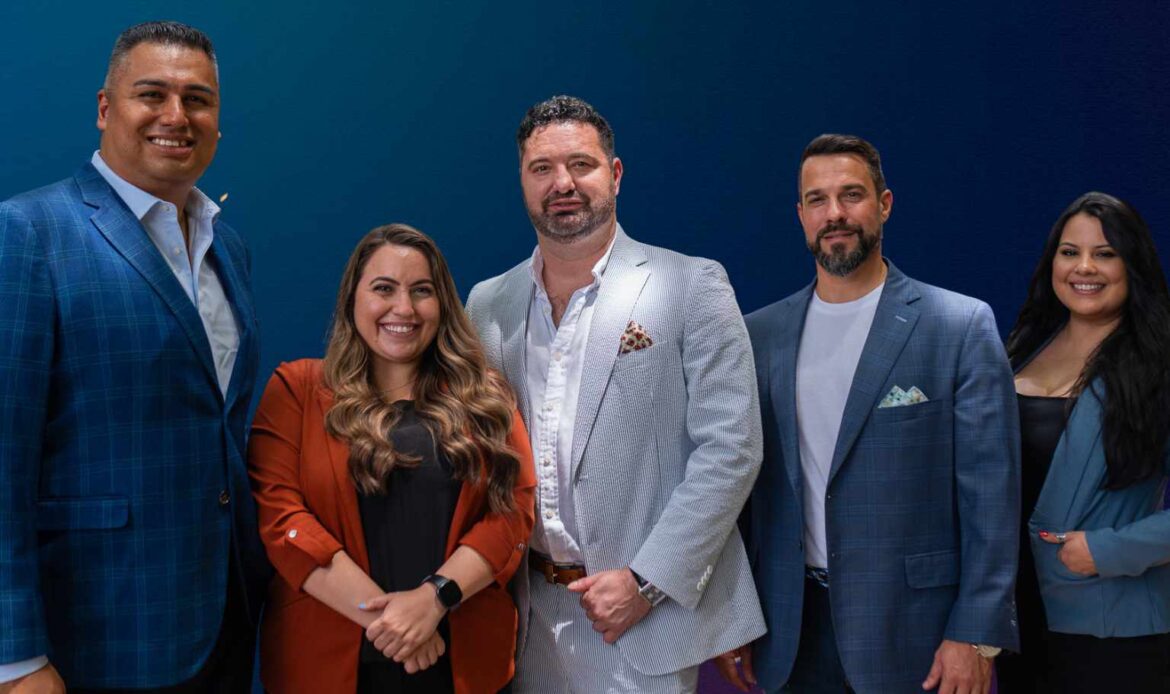
Drew Gibbs, a founding attorney, served as a Texas prosecutor before entering personal injury work. Prosecutors prove causation for a living: the connection between the defendant’s conduct and the harm that followed. In car accident cases, causation is the single most attacked element by defense counsel and insurers, especially in soft-tissue and delayed-onset injury cases.
The prosecutorial habit of building the causation chain from documentation and medical evidence transfers directly.
Deposition Habits From JAG Practice
Scott Crivelli served as an active duty Army JAG Corps officer before private practice. JAG service involves substantial witness work: preparing witnesses, cross-examining opposing witnesses, and presenting testimony in high-stakes proceedings. Car accident cases that reach litigation turn heavily on deposition performance and witness credibility, and that JAG background shapes how the firm prepares clients and challenges opposing witnesses.
No Fees Unless the Case Recovers
Car accident cases run on a contingency basis at Slingshot Law. Clients pay no attorney fee unless we recover compensation, and the firm advances the costs of investigation, witnesses, and litigation. Past results do not guarantee future outcomes, and the written engagement agreement covers all fee terms before work begins.
Call (800) 488-7840 for a case review.
Austin Car Accident Lawyer FAQ
What if the police report says I was at fault?
The police report is not the final word on fault. Officers write reports based on what they see at the scene and what parties tell them, often with limited information and no time to investigate. Contradictory witness statements, physical evidence, and reconstruction analysis may support a different fault picture.
Insurers give police reports significant weight, but the report may be effectively challenged with the right supporting evidence.
Do I have to give the other driver’s insurance company a recorded statement?
No. Recorded statements to the at-fault driver’s insurer are not required, and giving one before medical treatment stabilizes and the facts are documented almost always works against the injured person. Your attorney handles that communication. Your own insurance company may require statements under a cooperation clause, which requires separate legal review before proceeding.
What if my injuries did not show up until days after the crash?
Delayed-onset injuries are common in car accidents, especially soft tissue injuries, concussions, and back and neck injuries. Symptoms sometimes appear 48 to 72 hours after the crash. Adjusters use the gap between the crash and the first medical visit to argue the injury is unrelated.
Building the medical case around this pattern requires documentation from the treating providers explaining the delayed onset in medical terms.
What if the other driver was uninsured?
Texas requires drivers to carry at least $30,000 per person in liability coverage under Texas Transportation Code Chapter 601, but many drivers on the road remain uninsured. In those cases, uninsured/underinsured motorist coverage on your own auto policy may apply. If the driver was on the job at the time of the crash, employer coverage may also apply.
Identifying every possible source of coverage is often the difference between a full-value recovery and a limited one.
How long do I have to file an Austin car accident claim in Texas?
Most Texas personal injury claims must be filed within two years of the crash under Texas Civil Practice and Remedies Code § 16.003. Wrongful death claims run two years from the date of death. Claims against government vehicles or entities carry much shorter notice deadlines, sometimes as short as six months.
Waiting rarely helps the case because evidence and witness memory both fade.
Talk to an Austin Car Accident Lawyer
The claim file that shapes the settlement is under construction from day one. The insurance adjuster started building it the moment the crash report went in. Getting an attorney into the file before the adjuster’s version becomes the record is what changes the final outcome.
Call (800) 488-7840 or visit 1802 Lavaca Street, Austin, TX. Past results do not guarantee future outcomes.