


Georgetown has grown fast, and growth brings more cars, more construction, and more accidents that follow. If someone else’s carelessness left you hurt, the process ahead has a shape worth knowing before you step into it. Deadlines, fault, damages, and where a case is heard all follow Texas rules, and each one can change what your claim is worth.
Think of what follows as a map rather than advice for your exact situation. It covers the kinds of cases this area sees, the rules that govern them, how a slip-and-fall claim is proven, and how a lawsuit moves from a first phone call to a resolution.
The Hard Truth
- Texas gives you two years from the injury to file most personal injury lawsuits.
- You can recover as long as you were 50 percent or less at fault, with your award trimmed by your share.
- Georgetown claims are handled in Williamson County, and the large majority settle without a trial.
Injured in an accident around Georgetown and not sure where to start?
Texas law sets the ground rules for personal injury lawsuits in Georgetown: a two-year window to file, a fault rule that still pays you if you were half to blame or less, and a process that resolves most claims in Williamson County long before any trial.
The Kinds of Cases This Covers
Personal injury law reaches any harm caused by another party’s carelessness. A few case types make up most of the claims in and around Georgetown.
Vehicle Crashes
Car, truck, and motorcycle collisions are the most common, and the Interstate 35 corridor through Williamson County produces a steady share of them. These claims turn on who failed to drive safely and on documenting the injuries that followed.
Slip, Trip, and Fall Injuries
Falls on unsafe property, from wet store floors to broken stairs, are a category of their own. They hinge less on the fall itself and more on what the property owner knew, which is covered in detail further down.
Dog Bites and Other Injuries
Dog bites, pedestrian and bicycle crashes, and similar incidents round out the mix. Each rests on the same core idea: someone owed you a duty of care and broke it.
Wrongful Death
When an injury takes a life, Texas allows certain family members to bring a wrongful death claim. These cases carry their own rules about who may file and what a family can recover.
What to Do After an Accident in Georgetown

By the time you are back home and the first shock has faded, the soreness sets in and the insurance calls begin. What you do from that point protects both your health and any claim:
- See a doctor promptly, even if you felt fine at the scene, since some injuries surface a day or two later.
- Report the crash to your own insurer, but keep the account brief and factual.
- Save everything: photos, the crash or incident report number, and the names and numbers of any witnesses.
- Write down what you remember while it is fresh, including road and weather conditions.
- Decline to give the other side’s insurer a recorded statement.
- Talk to a lawyer before accepting any offer, since a first offer is rarely the last word.
These small steps are easy to skip while you are focused on healing, but each one closes a door an insurer might otherwise use to pay you less.
The Texas Rules That Shape Your Claim
Three legal rules do most of the work in any Georgetown injury case. Getting them right early keeps a strong claim from slipping away.
You Have Two Years to File
Texas generally gives you two years from the date of the injury to file suit. The clock usually starts on the day of the accident, though limited exceptions may apply, such as for an injured minor or an injury discovered later. If a government entity is involved, a much shorter notice deadline, sometimes as brief as six months, comes first. Miss the deadline that fits your case, and a court will almost certainly dismiss it.
The 51 Percent Fault Rule
Texas splits responsibility under a system called proportionate responsibility. Here is what it means in practice:
- You may recover as long as you are 50 percent or less at fault.
- Your award is reduced by your percentage of responsibility.
- Cross above 50 percent, and you recover nothing.
Because that line decides so much, insurers work to push your share of blame past it, which is why evidence of what really happened matters from day one.
What Texas Lets You Recover
Texas does not cap most compensatory damages against a private defendant in an ordinary injury case, so a recovery reflects the actual harm rather than an arbitrary ceiling. That typically includes current and future medical bills, lost wages and earning capacity, pain and mental anguish, and property damage. Punitive damages, reserved for especially reckless conduct, are the exception the state does limit by statute.
How Insurance Coverage Shapes Your Recovery
A strong claim is only worth what there is insurance to pay it, and Texas sets low minimum limits, so a serious injury can outrun the at-fault driver’s coverage quickly. A few coverages decide how much is actually collectible:
- The at-fault driver’s liability policy. Texas requires only 30/60/25 coverage, meaning $30,000 per injured person, $60,000 per accident, and $25,000 for property damage.
- Your own uninsured and underinsured motorist coverage. Texas insurers must offer it, and you keep it unless you rejected it in writing, so you may carry protection you do not remember choosing.
- Other policies that may apply. Coverage held by a household member, or a commercial policy when a work vehicle is involved, can add to what is available.
Finding every policy that could contribute is part of valuing a claim, so a large loss is not left partly uncovered by a driver who carried only the state minimum.
Proving a Slip-and-Fall Claim in Texas
Slip-and-fall cases are won or lost on what the property owner knew, not on how hard you fell. Texas sets a demanding standard for an injured customer.
The Four Things You Must Show
To hold a property owner responsible, you generally have to prove all four of these:
- A dangerous condition existed that posed an unreasonable risk of harm.
- The owner had actual or constructive knowledge of it.
- The owner failed to use reasonable care to fix it or warn you.
- That failure caused your injury.
Actual vs. Constructive Knowledge
Actual knowledge means an employee saw the hazard or created it. Constructive knowledge means the danger sat there long enough that a careful owner would have found it. That second path is usually the real fight, because proving how long a spill or defect existed often decides the case. It is also why footage and sweep logs matter so much, and why they need to be preserved quickly before they disappear.
The Open-and-Obvious Defense
Owners frequently argue that a danger was open and obvious, meaning you should have seen and avoided it. Texas courts recognize that defense, though it has limits, and the full circumstances of the fall decide whether it holds. The duty an owner owes also shifts with your reason for being there, with a customer owed the most and an uninvited visitor the least.
From First Call to Final Resolution
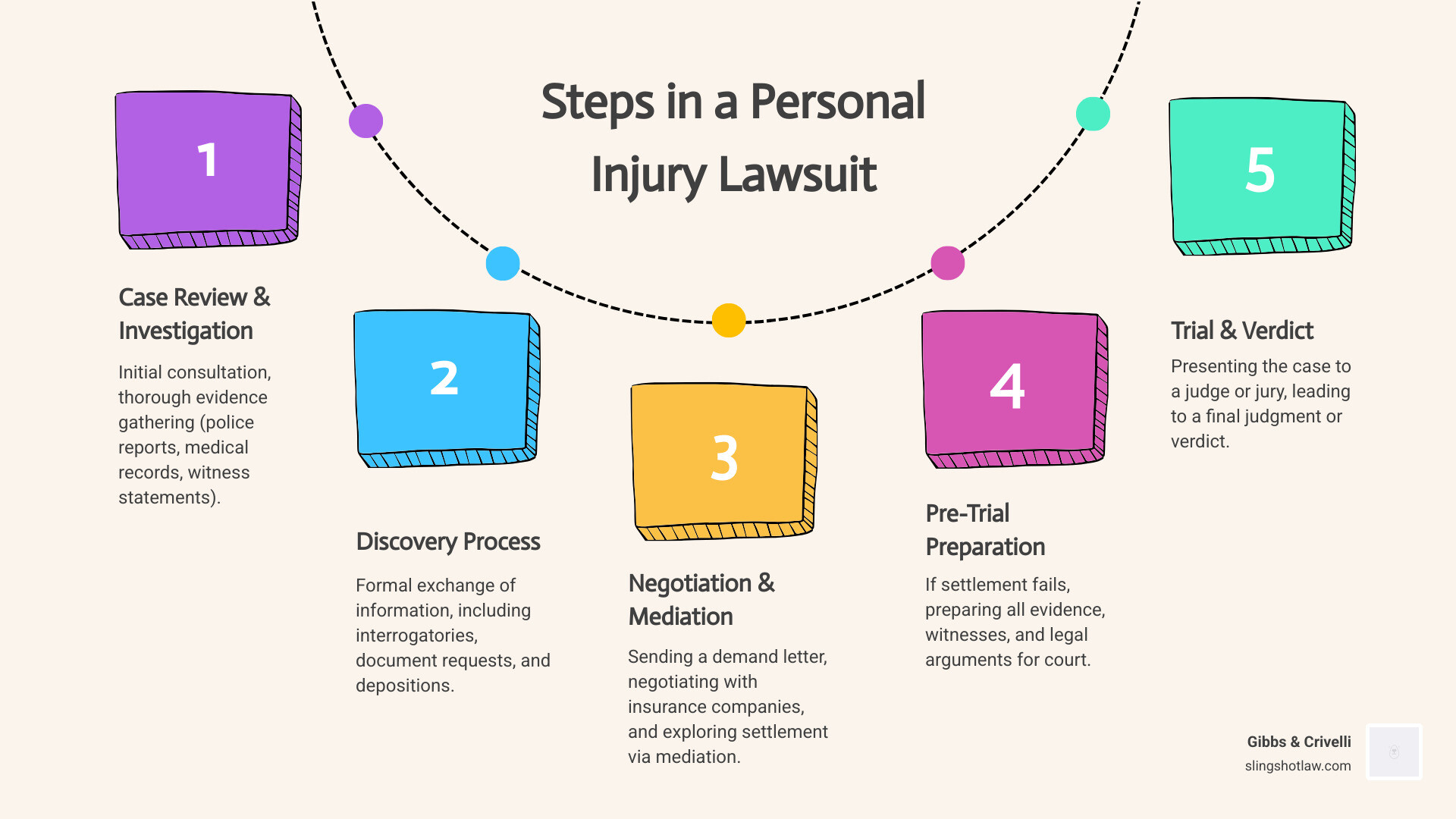
A Georgetown injury claim tends to move through the same stages, and knowing them removes a lot of the uncertainty:
- Consultation and investigation. A lawyer reviews the facts, collects the report, records, and evidence, and identifies who is responsible.
- Treatment and documentation. You focus on healing while your losses are documented, since a claim cannot be valued until the medical picture settles.
- Demand and negotiation. A documented demand goes to the insurer, and negotiations begin.
- Filing suit. If the insurer will not deal fairly, a lawsuit is filed in Williamson County.
- Discovery and mediation. Both sides exchange evidence, and most cases settle at or before mediation.
- Trial. When no fair settlement appears, the case is tried before a Williamson County jury.
Filing in Williamson County
Georgetown is the county seat of Williamson County, so injury lawsuits that arise here are filed in the county’s courts. Venue matters more than most people realize:
- The jury pool is drawn from Williamson County residents.
- Local court procedures and the defense firms you face differ from those in neighboring counties.
- The great majority of claims settle before a trial is ever needed.
Beyond Georgetown
The same Texas rules follow the growth across the county, and these cases rarely stay within one city. We handle claims in Georgetown along the Interstate 35 corridor, in Round Rock just to the south, and in Cedar Park and Leander on the western side of Williamson County.
What a Local Team Notices

As Central Texas injury attorneys, we have seen insurers treat a booming area like Georgetown as a place to close claims fast and cheap. Two mistakes tend to cost injured people the most on their own: giving a recorded statement without advice, and taking an early check before the real cost of an injury is known. A few patterns show up again and again:
- Opening offers rise once a claim is properly documented.
- Fault arguments lose steam when the physical evidence is laid out.
- Saving footage and reports early changes what a case is worth.
Frequently Asked Questions
How long do I have to file a personal injury lawsuit in Georgetown?
Generally two years from the injury under Texas law, with a much shorter notice deadline, sometimes six months, for claims against a government entity. Because the deadline is strict, pin yours down early.
Can I still recover if the accident was partly my fault?
Yes, as long as you were 50 percent or less at fault. Your award is reduced by your share, and only fault above 50 percent bars recovery entirely.
What should I do right after a crash in Georgetown?
Get medical care, report the crash to your own insurer, and save photos and witness details. Avoid giving the other driver’s insurer a recorded statement, and talk to a lawyer before accepting any offer.
How do I know if I have a slip-and-fall case?
You generally must show the owner had actual or constructive knowledge of a dangerous condition and failed to fix it or warn you. Proving how long the hazard existed is usually the deciding factor.
Does Texas limit how much I can recover?
For most private-defendant injury cases, no. Texas does not cap ordinary compensatory damages, so your recovery reflects your actual losses. Punitive damages, awarded only for extreme conduct, are limited by statute.
Where would my Georgetown case be filed?
In the Williamson County courts, since Georgetown is the county seat. Most claims settle first, but where a case would be tried shapes the local rules and the jury pool.
Hurt in Georgetown? Let a Local Team Take It From Here.
A serious injury in a fast-growing city should not leave you guessing about your rights. Slingshot Law – Injury Attorneys helps injured people in Georgetown, Round Rock, Cedar Park, and across Williamson County weigh their options and take on the insurance company. You can see how Texas courts operate through the Texas Judicial Branch, and read up on auto coverage and claims at the Texas Department of Insurance.
To learn where your claim stands, call (800) 488-7840 for a free, no-obligation review.